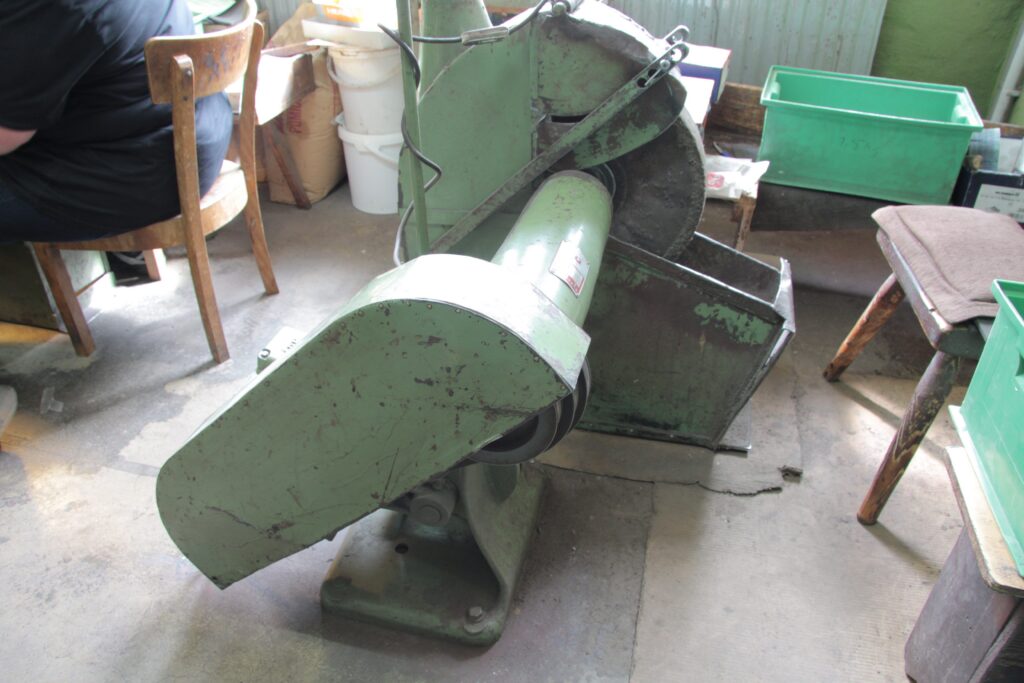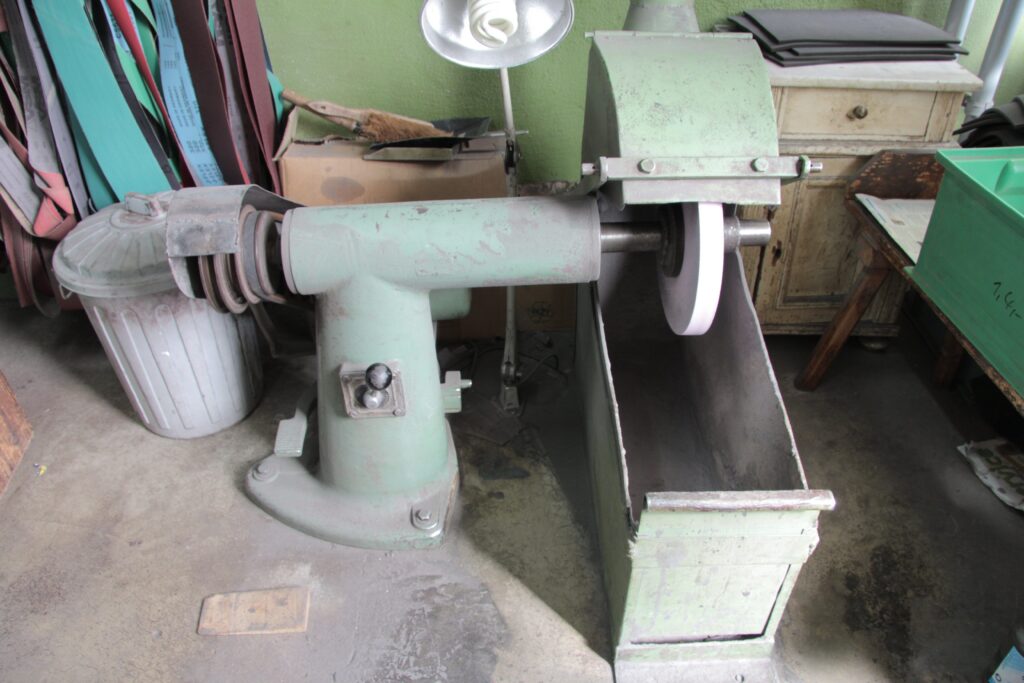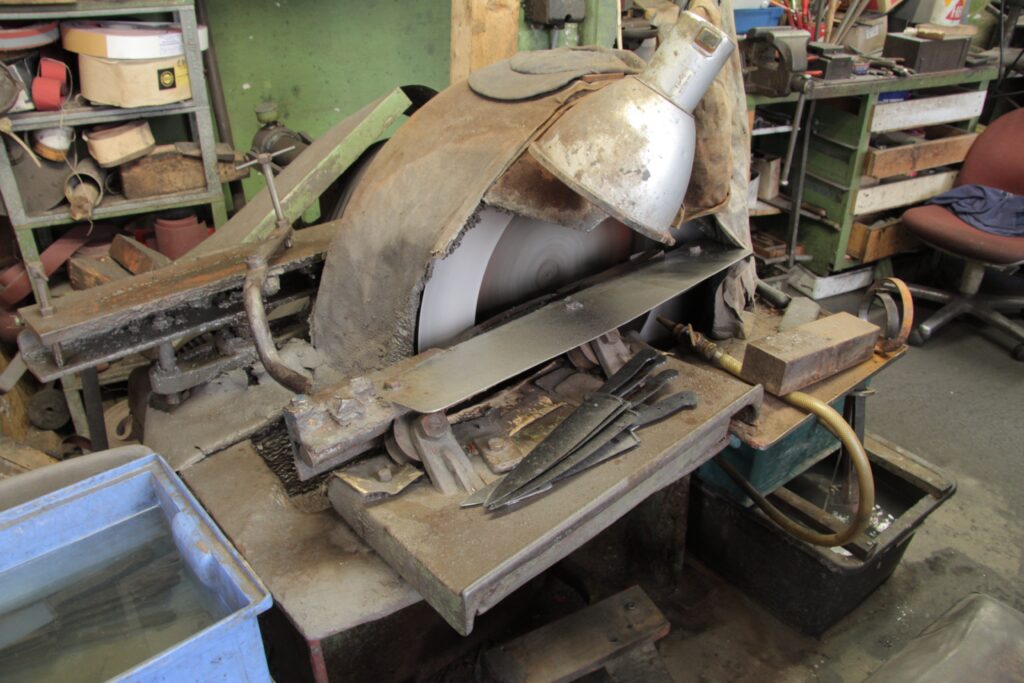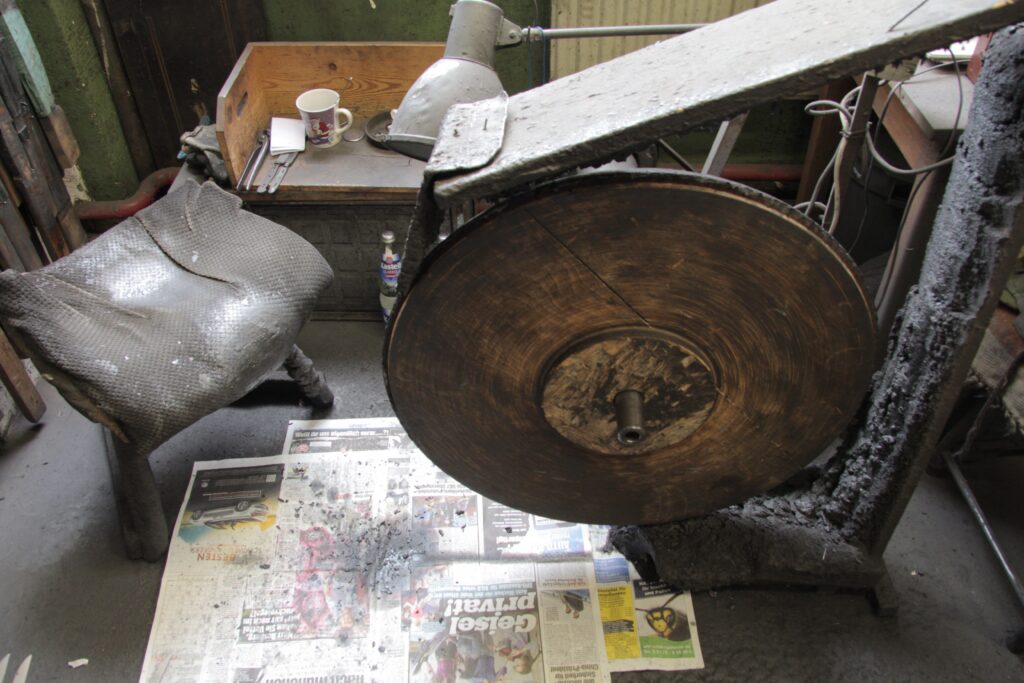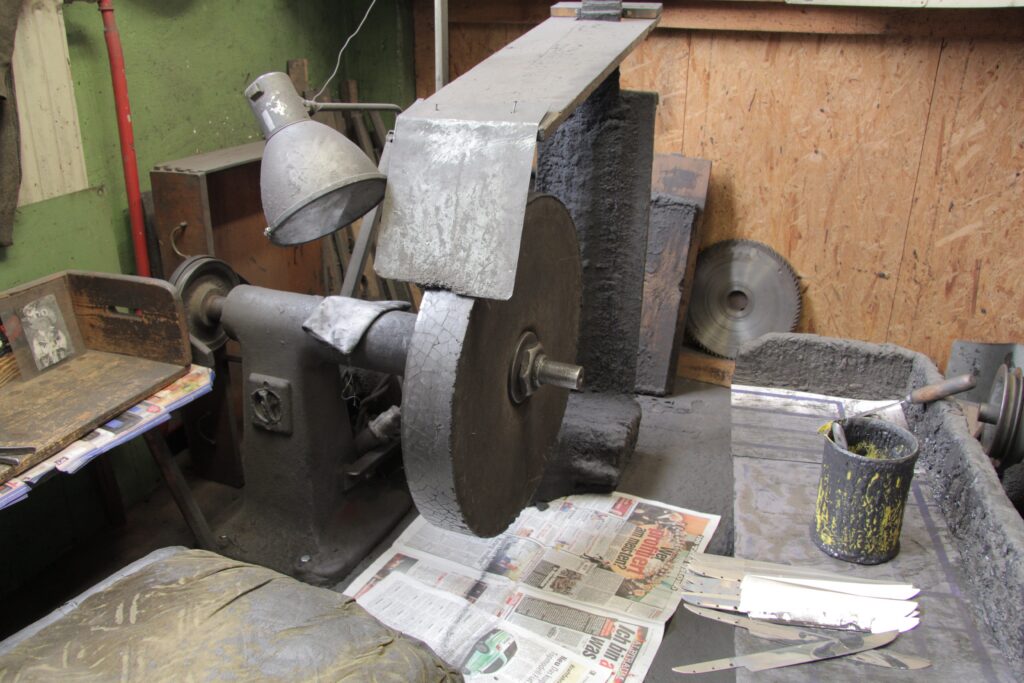
Knife-spine grinding machine
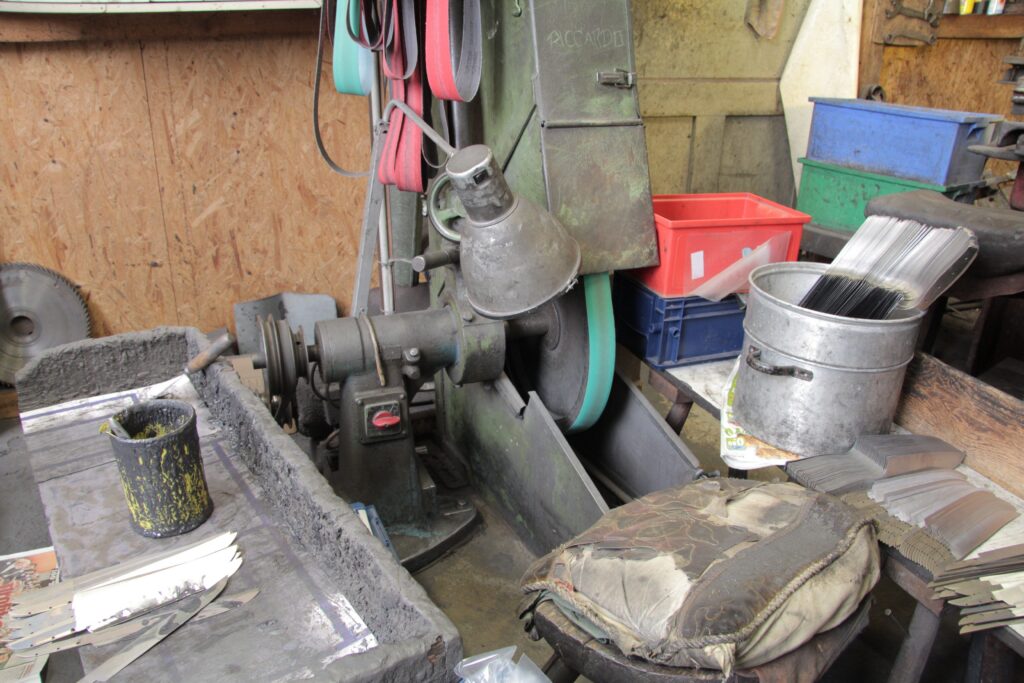
The knife-spine grinding machine is used to shape the back of the blade. To do so, the knife maker guides the back…

The knife-spine grinding machine is used to shape the back of the blade. To do so, the knife maker guides the back…
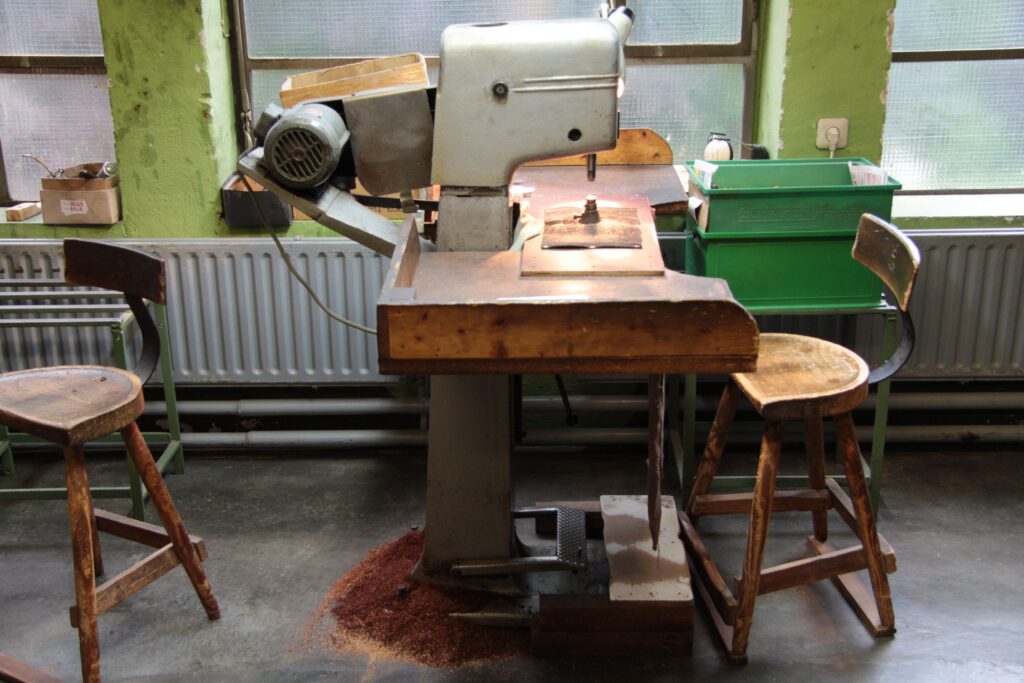
In knife-making the “Schurbock” (Schuren: technical term in Solingen for polishing) made by Rema in the 1980s is used to polish the…
The electric whetting trestle from the 1980s is used to further refine the cutting edge of the blade from the point of…
The electric riveting machine manufactured by Adam Baumüller GmbH in the 1980s is used to mount the knife blade onto the knife…
The “Kessel” sharpening machine was developed in 1910 by Heinrich Kessel (died in 1959). It is in use in the knife factory…
The “Blaupließtbock” from the 1910s is in use in the knife factory Windmühlenmesser Robert Herder in Solingen (Germany North Rhine-Westphalia). It is…
The “Feinpließtbock” from the 1910s is an electric sharpening machine which is used, generally by trained operators, to create a special finish…
The hacksaw from the 1920s is a machine tool which saws rods (either wood or metal) into short pieces. A transmission sets…
The planing machine from the 1920s is a machine tool used for planing work on long iron work pieces. The machine brings…
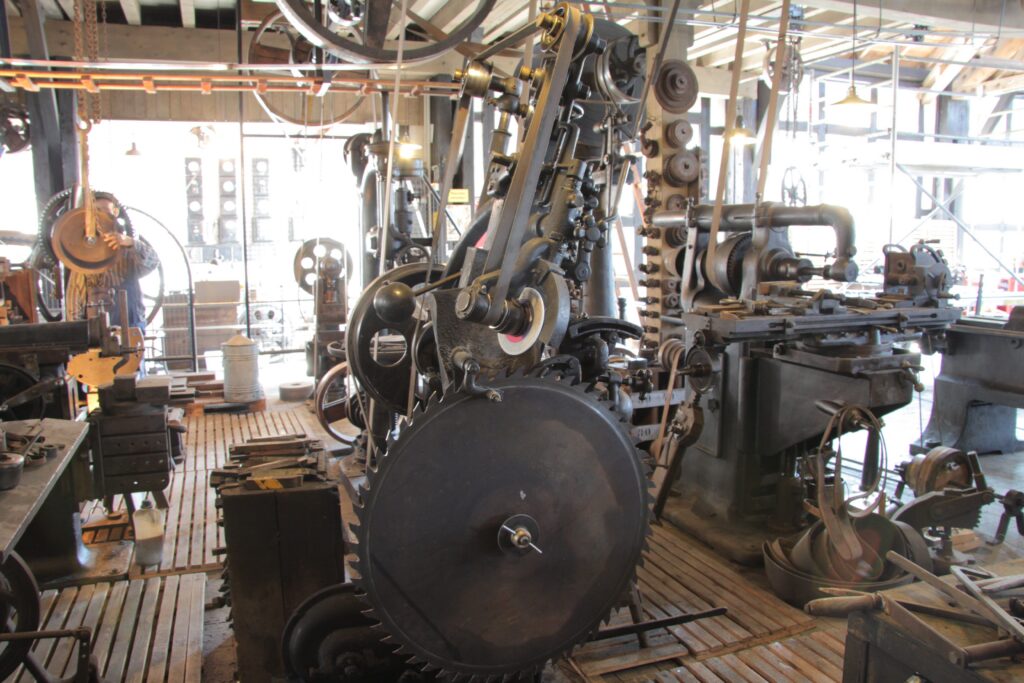
In the 1920s the saw blade sharpening machine sharpened the circular saws in the Jacob Döring Tool Factory in Hagen (Germany, North…
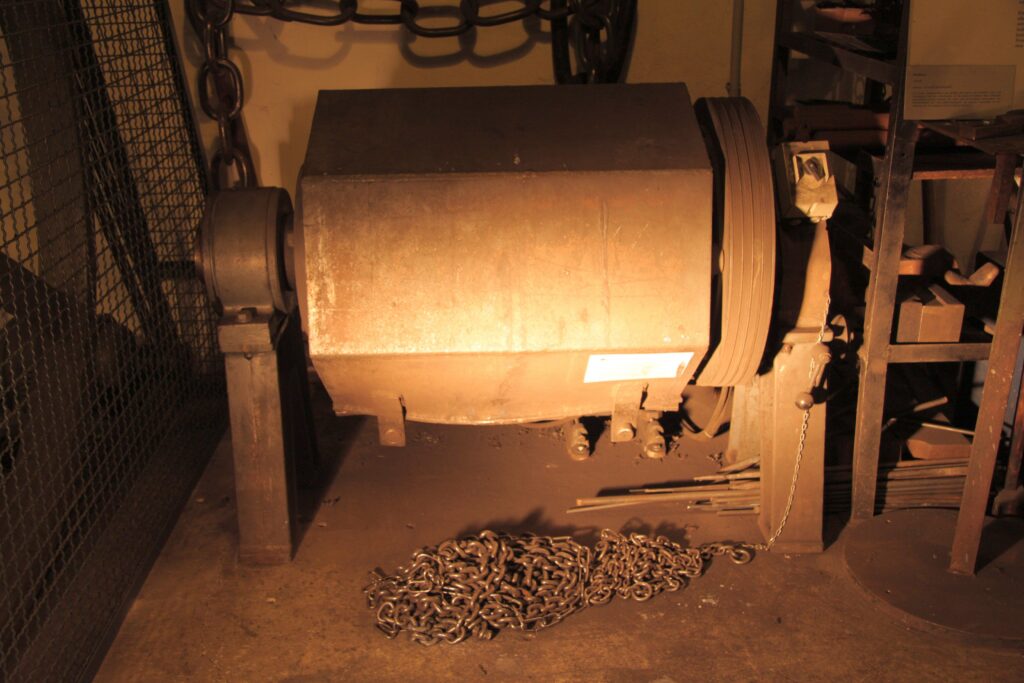
Since the 1920s the electric tumbling barrel was used in the chain factory to smoothen the surfaces of the finished welded or…
The electric hand welding machine from the 1920s welds single chain links together. The welder must place a “U” shaped chain link…
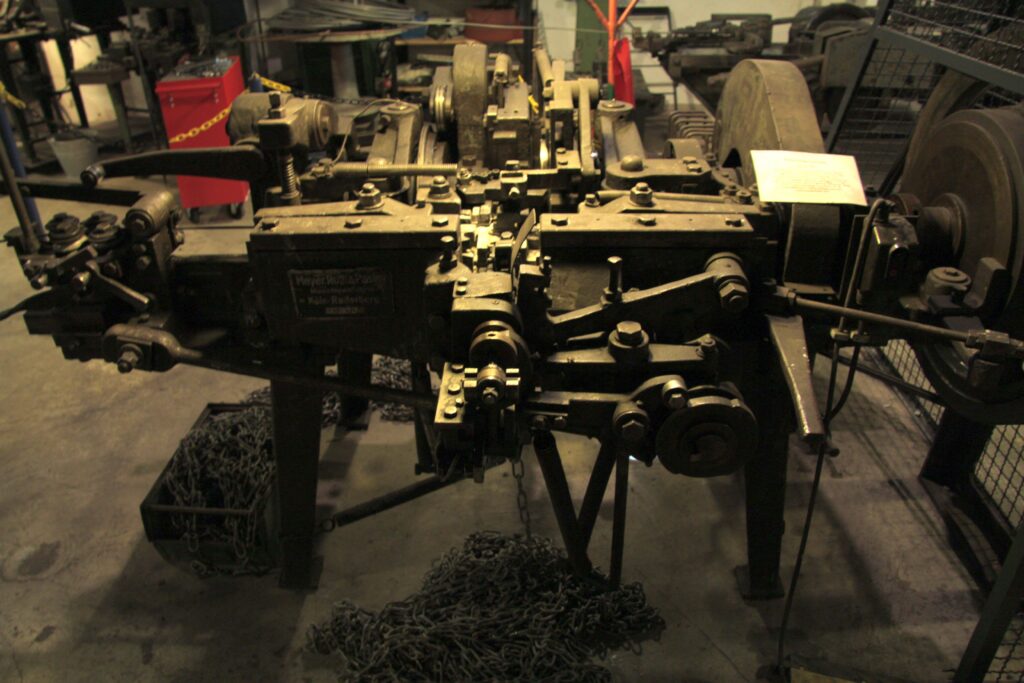
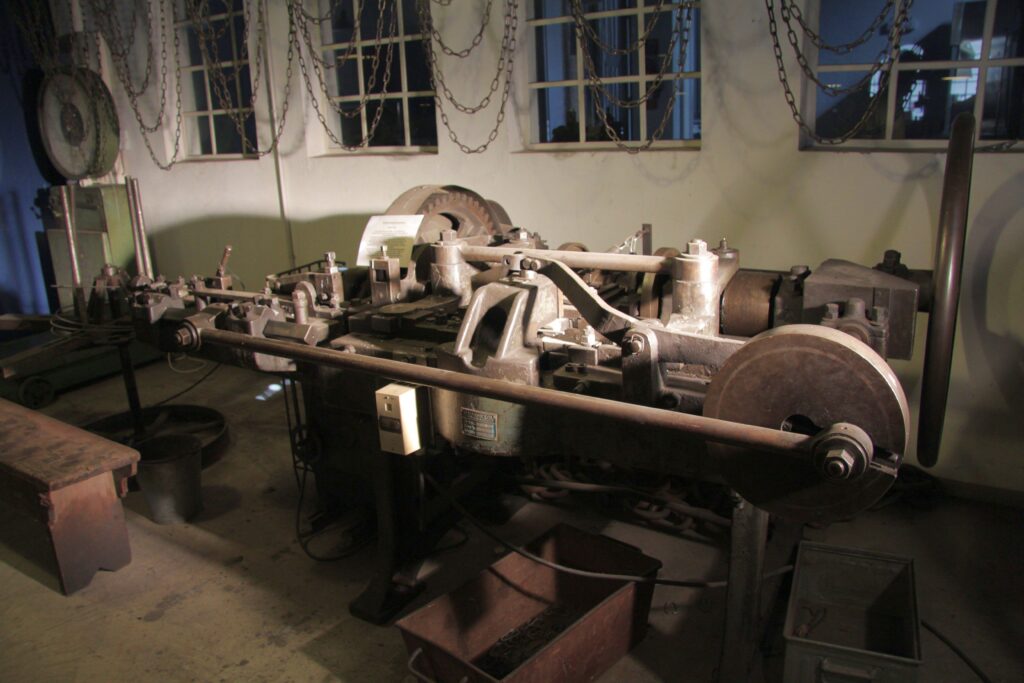
The electrically driven chain bending machine from the 1950s produces chains by straightening wire (removal of deformation of the wire due to…
The electric link bending machine made in 1939 by the manufacturer Malmedie & Co., produces single chain links. First, a wire is…
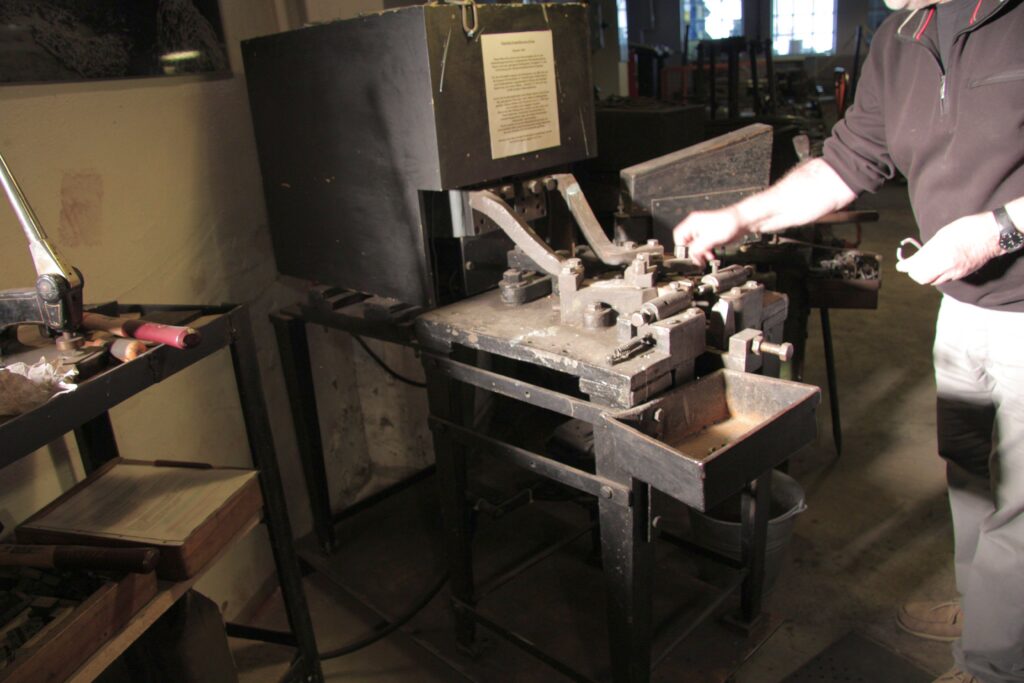
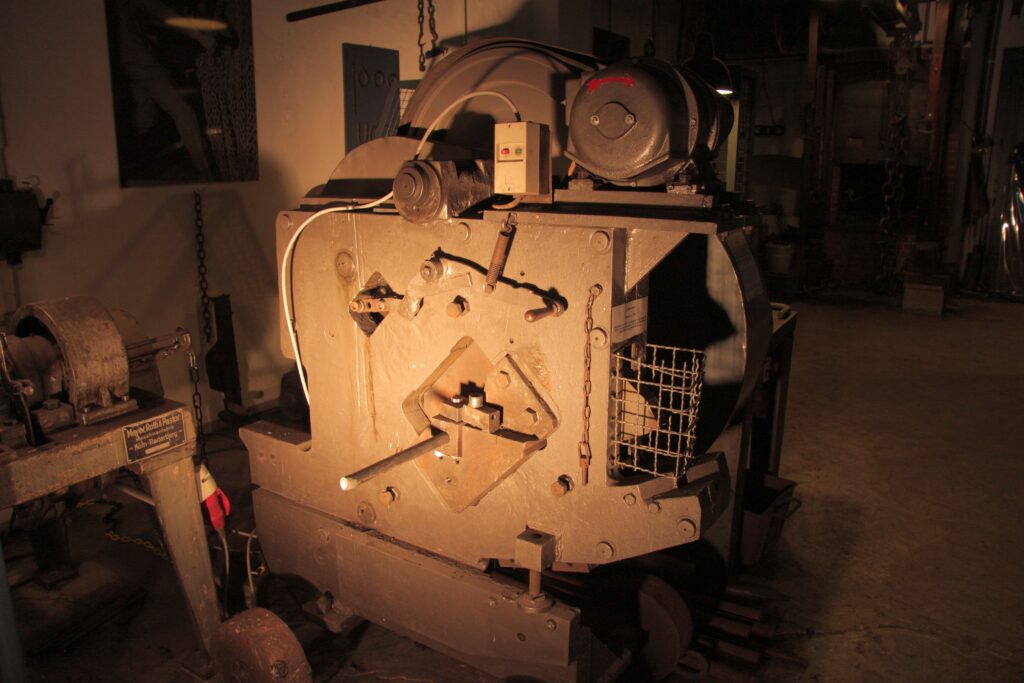
This electrically driven machine from the 1920s bends cut-to-size steel rods, the so called “pins”, into the shape of a “U”. A…
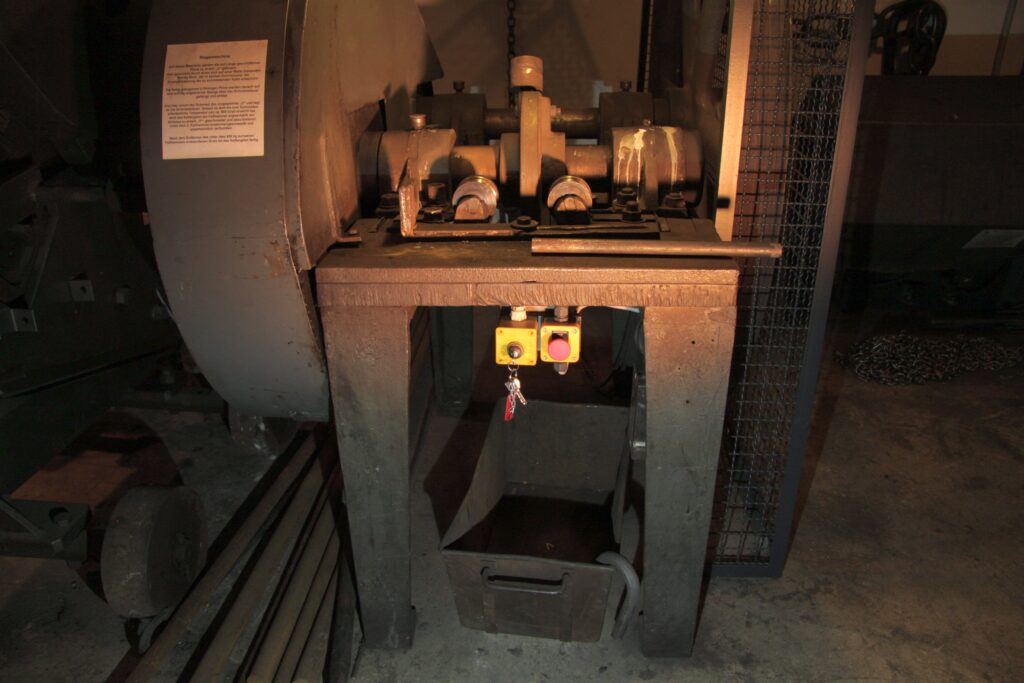
The rod cutter from the 1920s cuts approximately 3m long steel rods into accurately dimensioned pieces, called “pins” which can then be…