Steelwork: Pusher furnace and conveying system
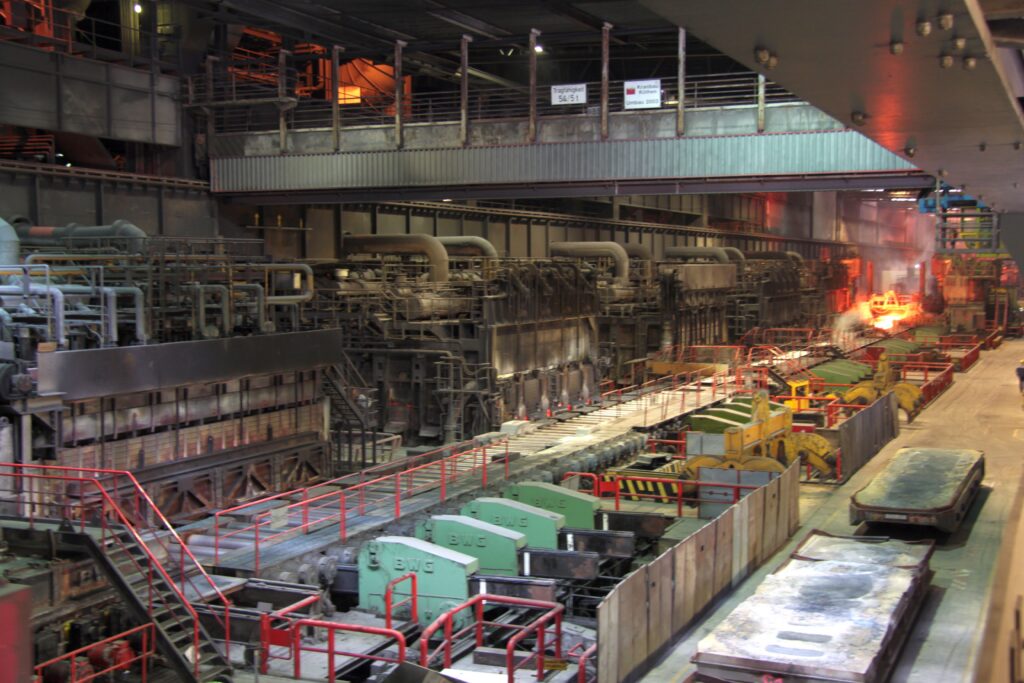
The pusher furnace is in use at the hot rolling mill in the Stahlwerk (steelworks) of Thyssen-Krupp in Duisburg. In the hot…

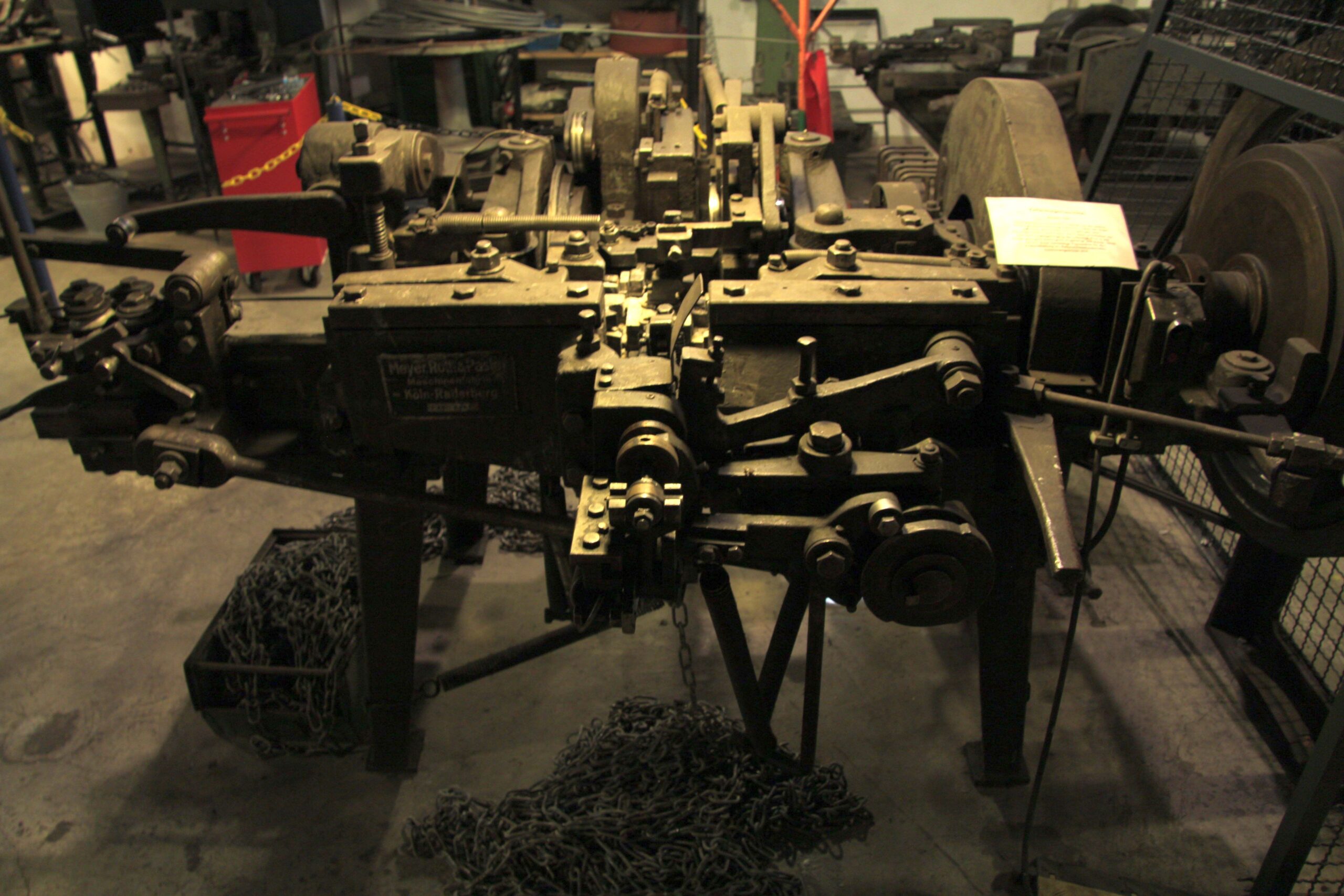
The electrically driven chain bending machine from the 1950s produces chains by straightening wire (removal of deformation of the wire due to winding on the coil) and then cutting and bending it. The sounds made by this machine consist of the simultaneous noise ensemble of wire straightening, cutting, bending and connecting of the chain links.
In contrast to older chain bending machines, this machine automatically connects each U-shaped “pin” with the previously forged chain link and presses the ends together, so that an automatic chain welding machine can perform the last step.
The machine was in use in the chain factory JOTO-Werk in Fröndenberg. The machine is currently displayed in the Chain Forge Museum in Fröndenberg (Germany, North Rhein-Westphalia) and is used solely for show purposes.
The Chain Forge Museum exhibits the manual and industrial manufacturing of chains.
Sound recordist: Konrad Gutkowski/Julian Blaschke
Photographer: Konrad Gutkowski/Julian Blaschke
Video recordist: Konrad Gutkowski/Julian Blaschke
The pusher furnace is in use at the hot rolling mill in the Stahlwerk (steelworks) of Thyssen-Krupp in Duisburg. In the hot…
The Video Home System (VHS) was the standard for consumer-level analog video recording on tape cassettes. JVC released the first VHS machines…
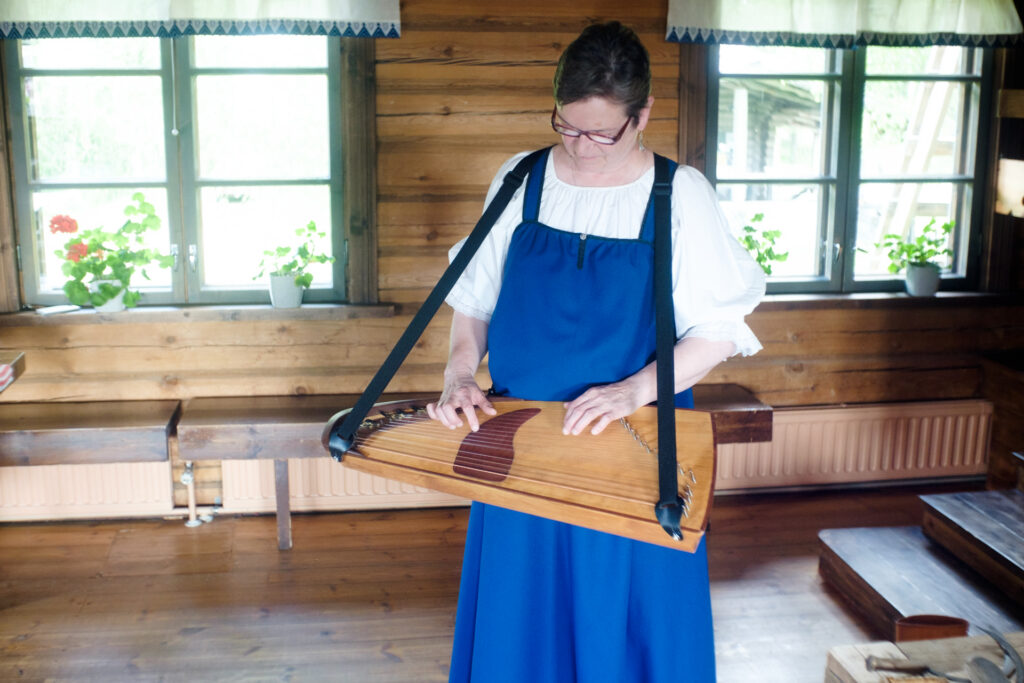
Liisa Matveinen is a professional traditional folk musician who has done her masters degree in Kantele playing and singing. Kantele is a…
Ilosaarirock Festival is an annual rock festival held in Joensuu, Finland. The festival was founded in 1971 and it is the second…