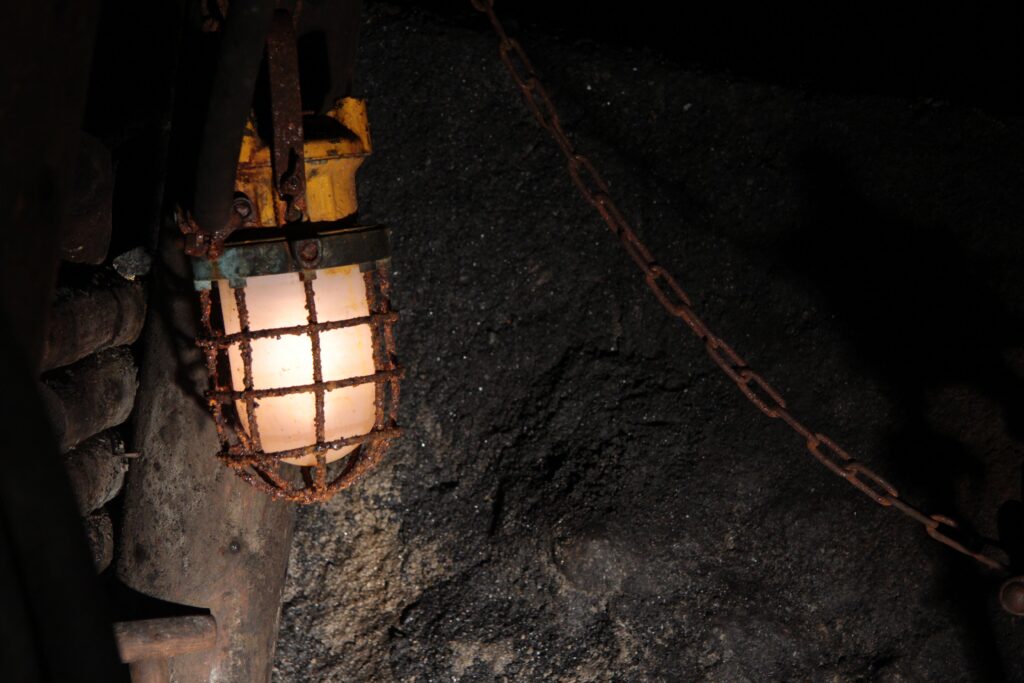
Pneumatic lamp
The pneumatic lamp presumably was used in the Ruhr-area coal mining industry as an underground source of light in the 1940s. Today…

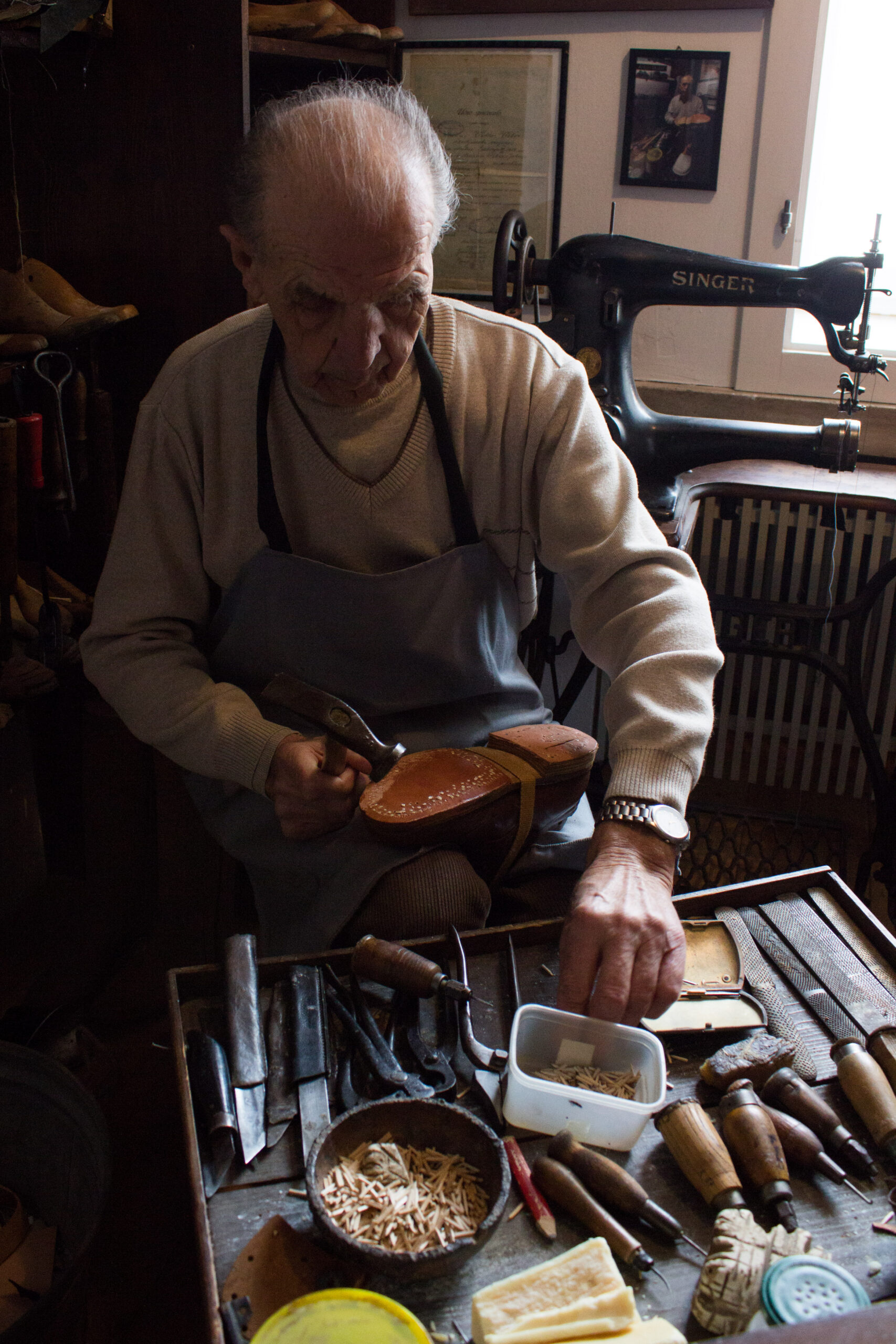
In former times, shoemakers used wooden pins called "pegs" to attach leather soles. These were less durable than metal nails, but more suitable for elegant footwear.
The work of a shoemaker was recorded in the Museum of Recent History, Celje.
Part of their permanent exhibitions is the Tradesmen’s Street dedicated to Celje’s industrial workers, the local industrial traditions, workers’ culture and the value of work. This section also includes a presentation of a shoemaker’s shop, where master shoemaker Anton Mužič holds occasional demonstrations.
Anton Mužič (*1930) comes from a shoemaking family where he learned the trade. He acquired additional skills and knowledge at a three-year vocational school that he completed with an apprentice exam. At first he worked as a shoemaker in the family shop and then after compulsory military service was employed at the Department of Orthopaedics in Celje hospital. He initially worked as a shoemaker and eventually re-qualified into a prosthetist. As a master craftsman, he has maintained contact with those working in orthopaedics to this day.
Sound recordist: Boštjan Troha
Video Recordist: Barbara Grilc
Photographer: Veronika Štampfl
The pneumatic lamp presumably was used in the Ruhr-area coal mining industry as an underground source of light in the 1940s. Today…
Kärna Mosse is a nature reserve located just outside of central Linköping (Sweden). The area is part of the network Natura 2000…
Lada 1200 also called ”Zhiguli” is a Soviet made car manufactured between 1970-1989. It was based on a design of Fiat 124…
In Tampere the main road is called Hämeenkatu. It crosses the city from the railwaystation in east to Aleksanterin kirkko (Church of…