Changing a tambour
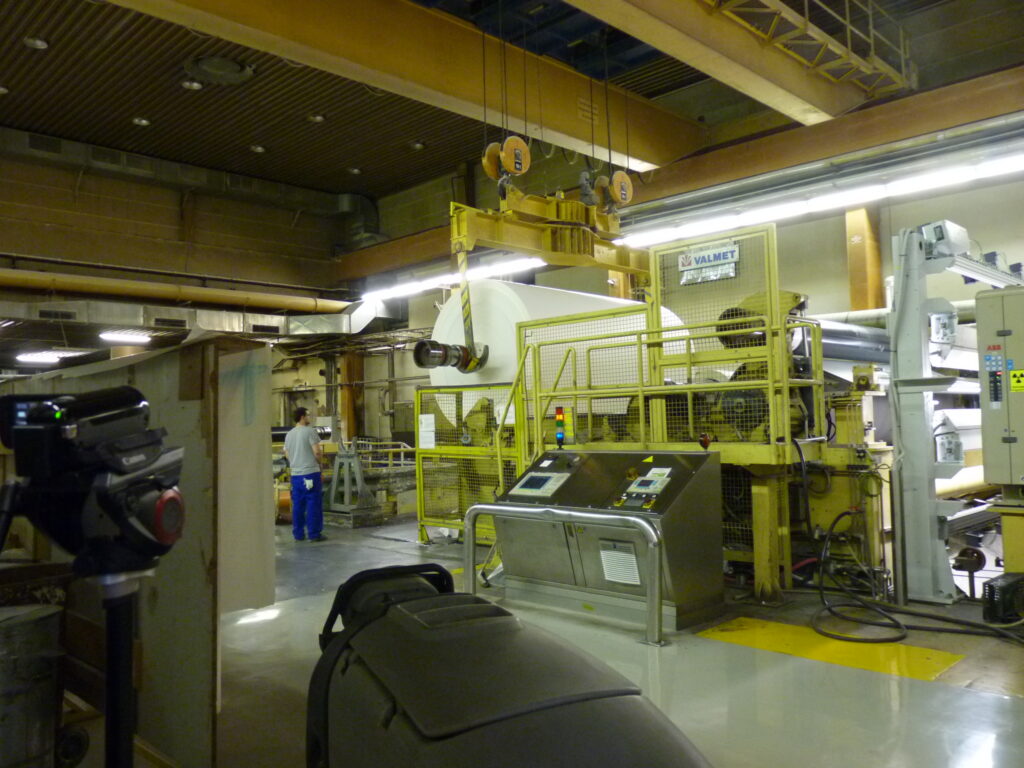
The Goričane company originates from one of the oldest Slovenian paper mills, established in 1740. The company has been producing paper at…

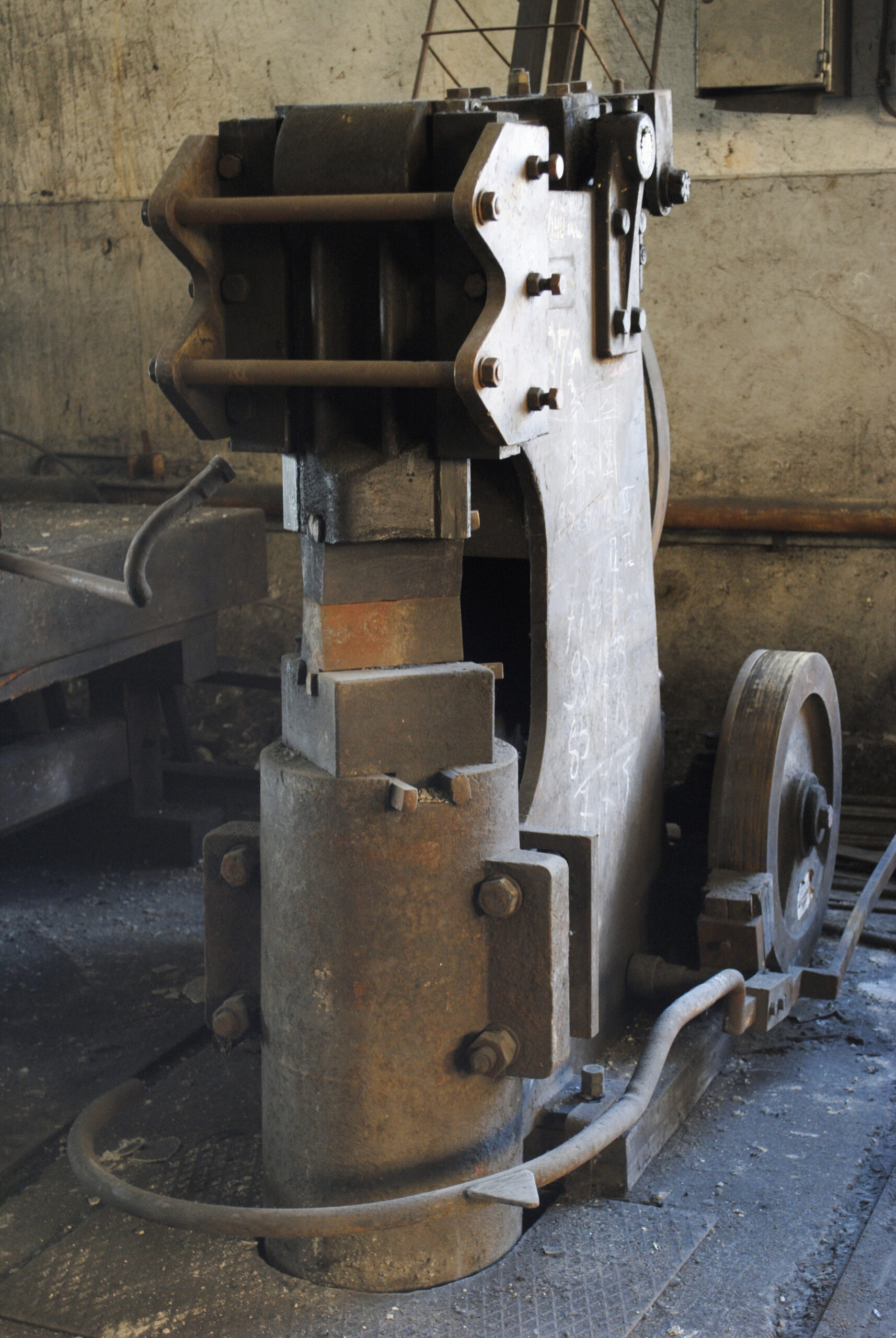
The spring hammer, produced in the Metallurgy School of Jesenice ironworks in 1955, was in operation until 1999. It is located in the forge area of the old locomotive workshops in Ljubljana.
The hammer was used to forge parts for steam locomotives and wagons.
The motion of the hammer is created by a crank mechanism powered by an electric motor. Too rigid a connection between the hammer and the crank mechanism might cause shock damage to the appliance. This is prevented, by using a leaf or bow spring, the elasticity of which reduces the stress on the mechanism and yet at the same time considerably intensifies the hammer blows.
Sound: Switching on the electrical motor to start the belt transmission in idling mode. A drive belt can then be engaged, using a pedal or an arm, to drive an eccentric disc. The rotational motion of the eccentric drives the connecting rod and this motion is in turn transmitted to the bow spring. The hammer, suspended on a toggle joint moves up and down in a vertical direction and so strikes the anvil.
Sound level: 101,9 dB
Sound recordist: Dušan Oblak
Photographer: Neža Renko
Video recordist: Barbara Grilc
The Goričane company originates from one of the oldest Slovenian paper mills, established in 1740. The company has been producing paper at…
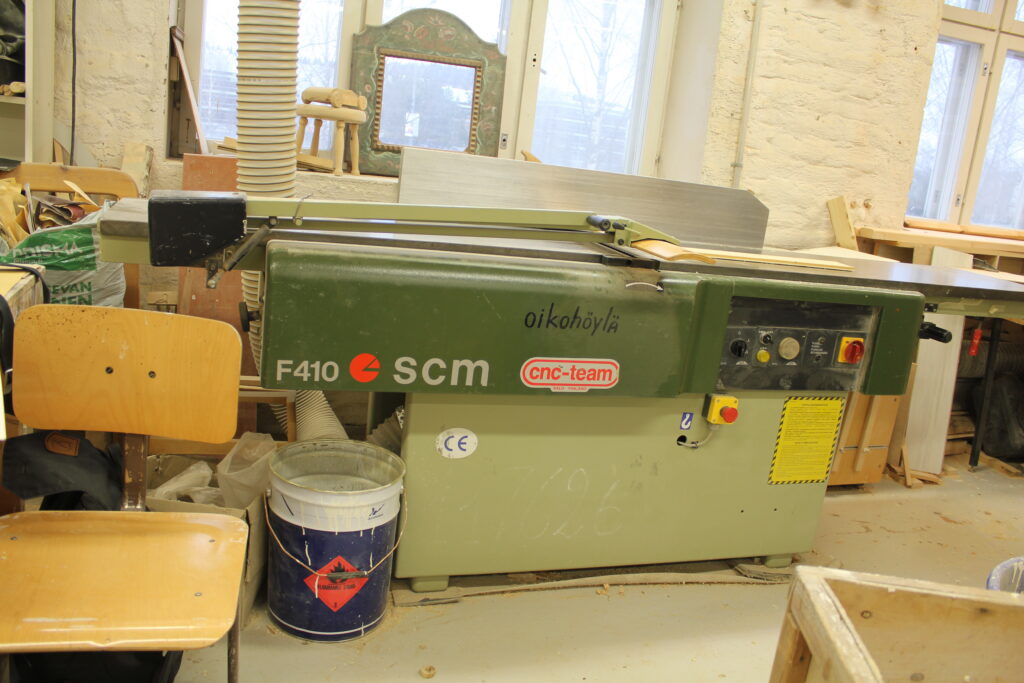
SCM model F410 Made in Italy in 1998. Importer CNC-team, Salo, Finland. This surface planer is in use in Jyväskylän Uusiotuote ry,…
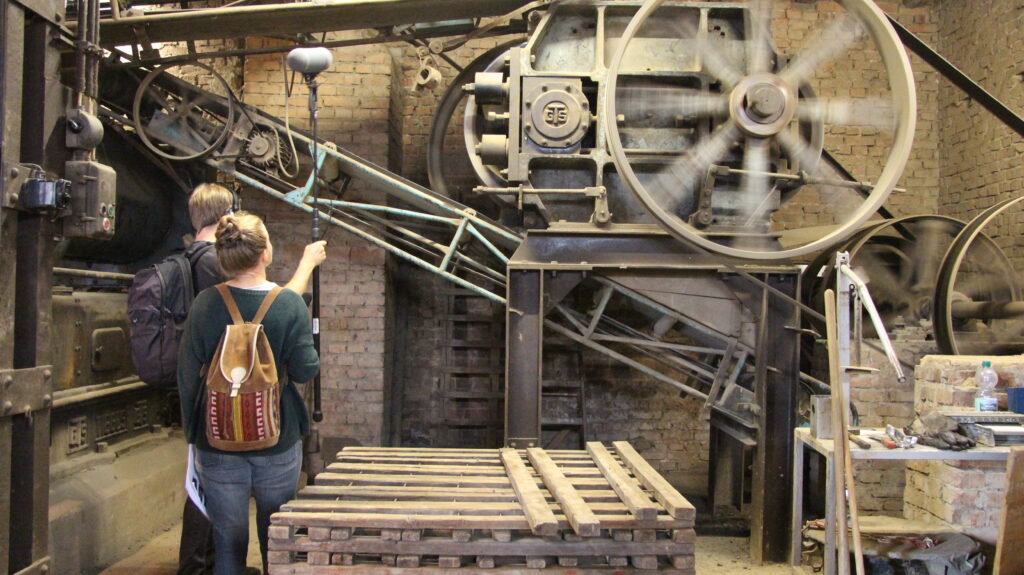
Brick production was of great importance in the Lippe area in Germany. The Brick Factory Beerman in Sylbach was one of the…
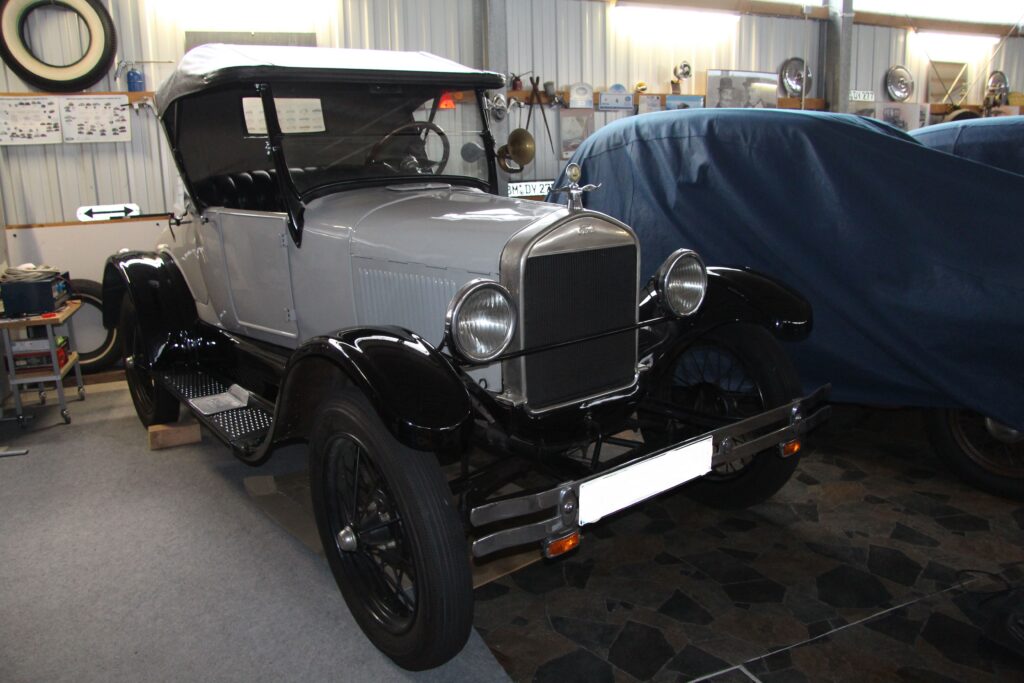
The Ford Model T marks the starting point of mass motorisation. It was developed by Henry Ford. From 1914 onwards Ford produced…