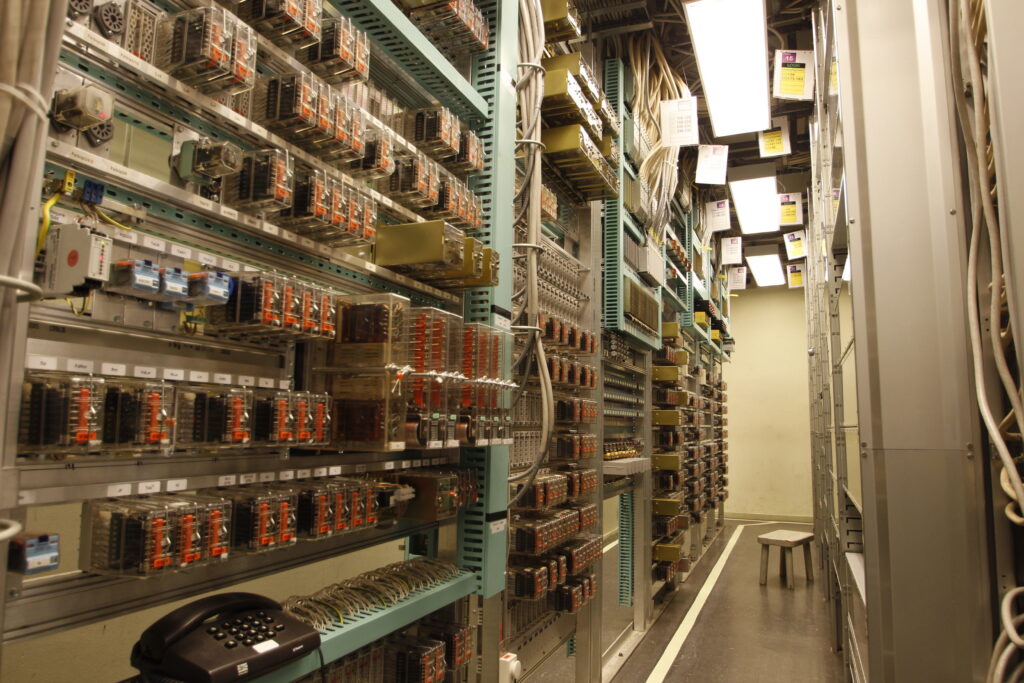
Relay based interlocking for railway operation
In railway signaling, an interlocking is an arrangement of signal apparatus that prevents conflicting movements through an arrangement of tracks such as…

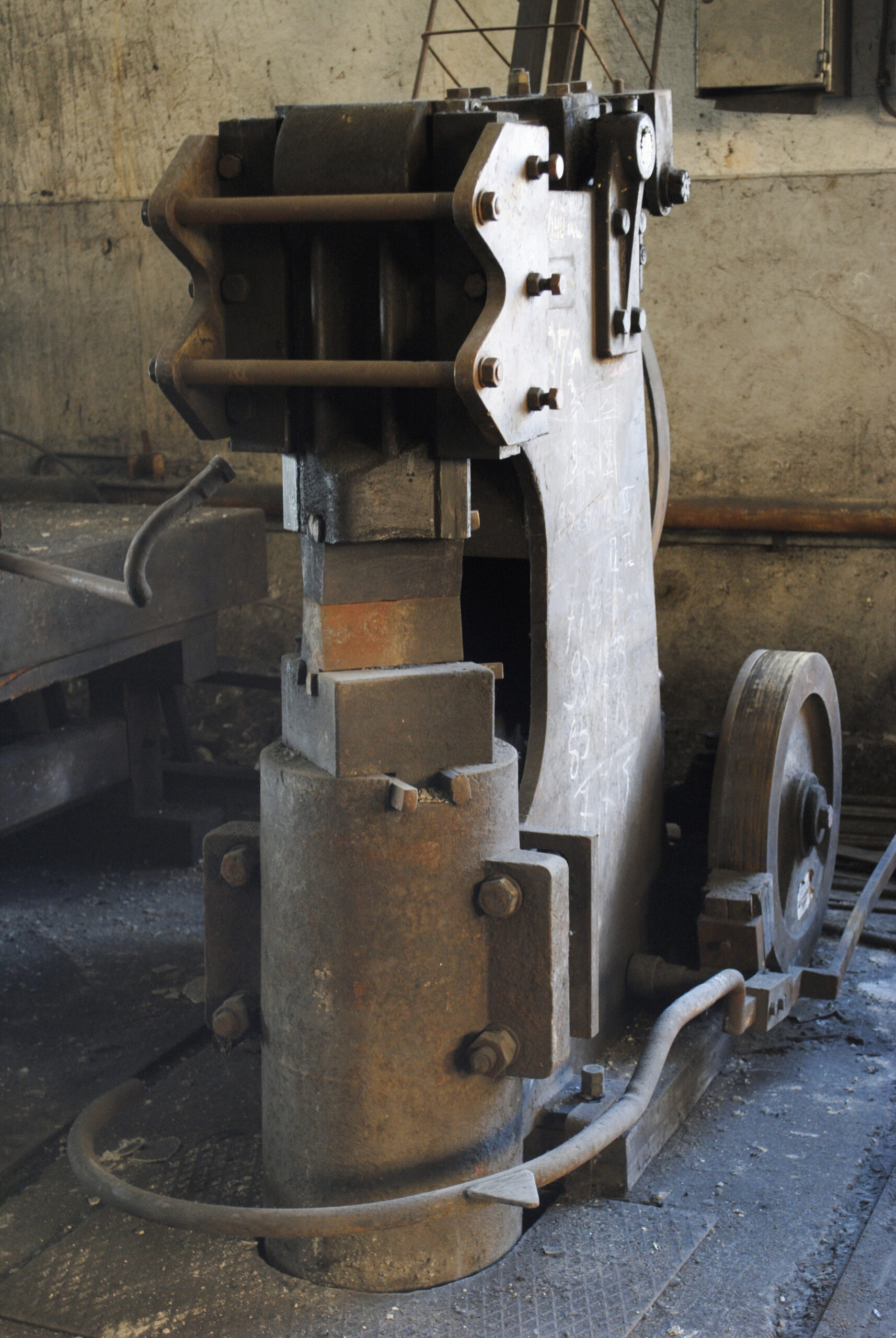
The spring hammer, produced in the Metallurgy School of Jesenice ironworks in 1955, was in operation until 1999. It is located in the forge area of the old locomotive workshops in Ljubljana.
The hammer was used to forge parts for steam locomotives and wagons.
The motion of the hammer is created by a crank mechanism powered by an electric motor. Too rigid a connection between the hammer and the crank mechanism might cause shock damage to the appliance. This is prevented, by using a leaf or bow spring, the elasticity of which reduces the stress on the mechanism and yet at the same time considerably intensifies the hammer blows.
Sound: Switching on the electrical motor to start the belt transmission in idling mode. A drive belt can then be engaged, using a pedal or an arm, to drive an eccentric disc. The rotational motion of the eccentric drives the connecting rod and this motion is in turn transmitted to the bow spring. The hammer, suspended on a toggle joint moves up and down in a vertical direction and so strikes the anvil.
Sound level: 101,9 dB
Sound recordist: Dušan Oblak
Photographer: Neža Renko
Video recordist: Barbara Grilc
In railway signaling, an interlocking is an arrangement of signal apparatus that prevents conflicting movements through an arrangement of tracks such as…
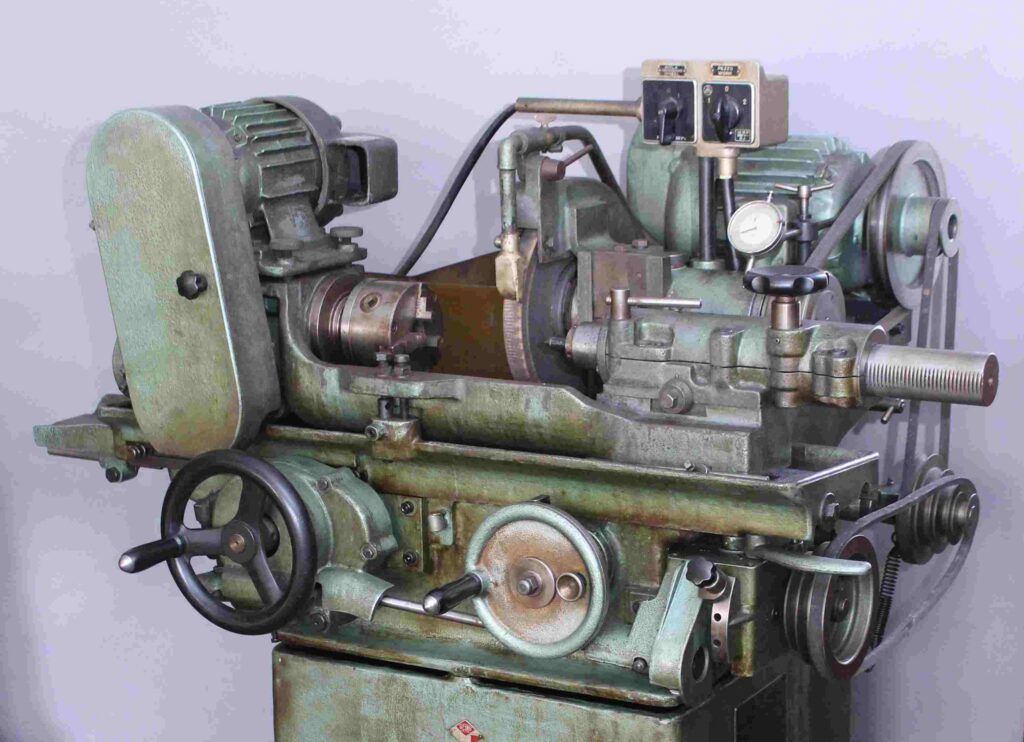
Floor dimensions: 1100 mm x 900 mm Weight: about 800 kg, Rotational speed up to 30 m / s The "Berco" grinding…
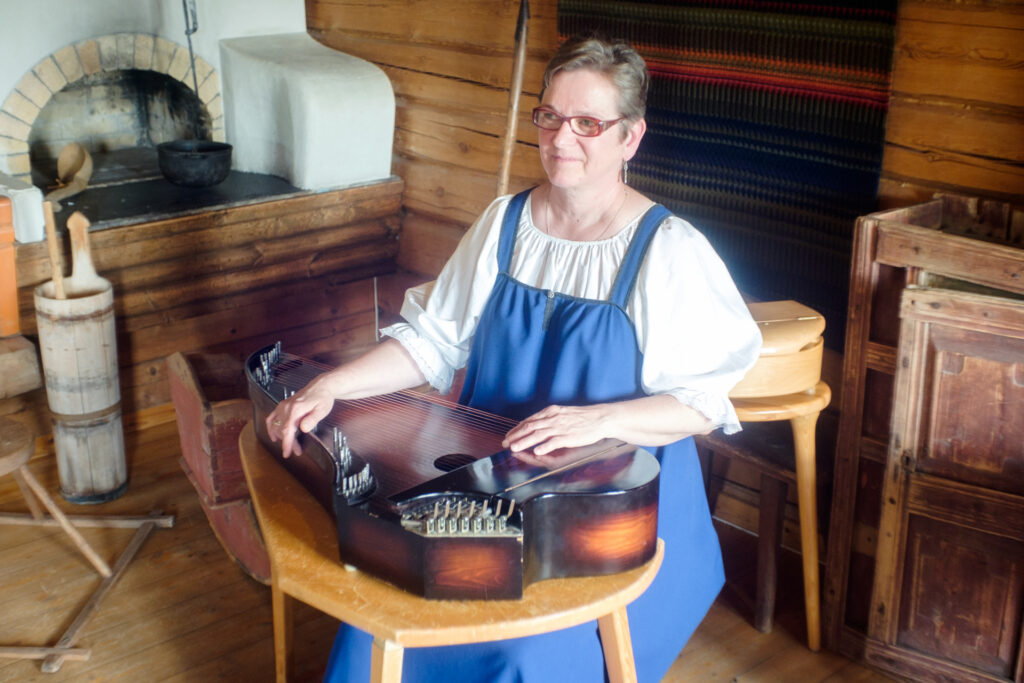
Liisa Matveinen is a professional traditional folk musician who has done her masters degree in Kantele playing and singing. Kantele is a…
Football game recorded on the neutral section inside the crowd. European championship qualifying Result 1-1 Ernst Happel Stadium. Meiereistraße 7 1020 Wien…