Signal horn (train horn)
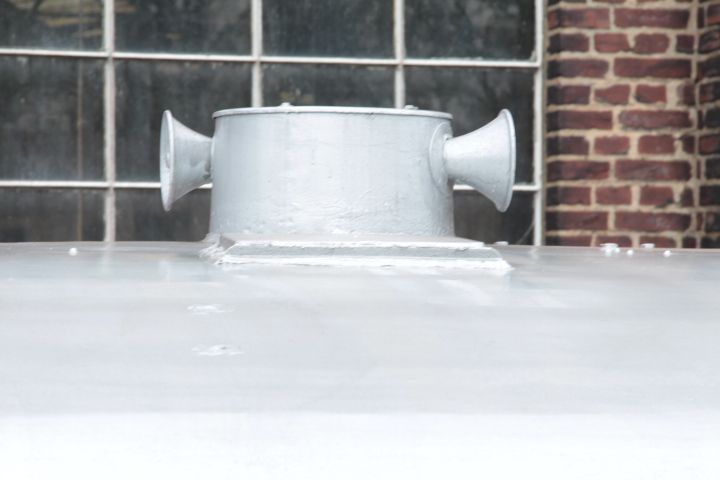
The signal horn (train horn) is a component of a Kleinlocomotive of the DB-production series 332, built in 1966 by Orenstein &…

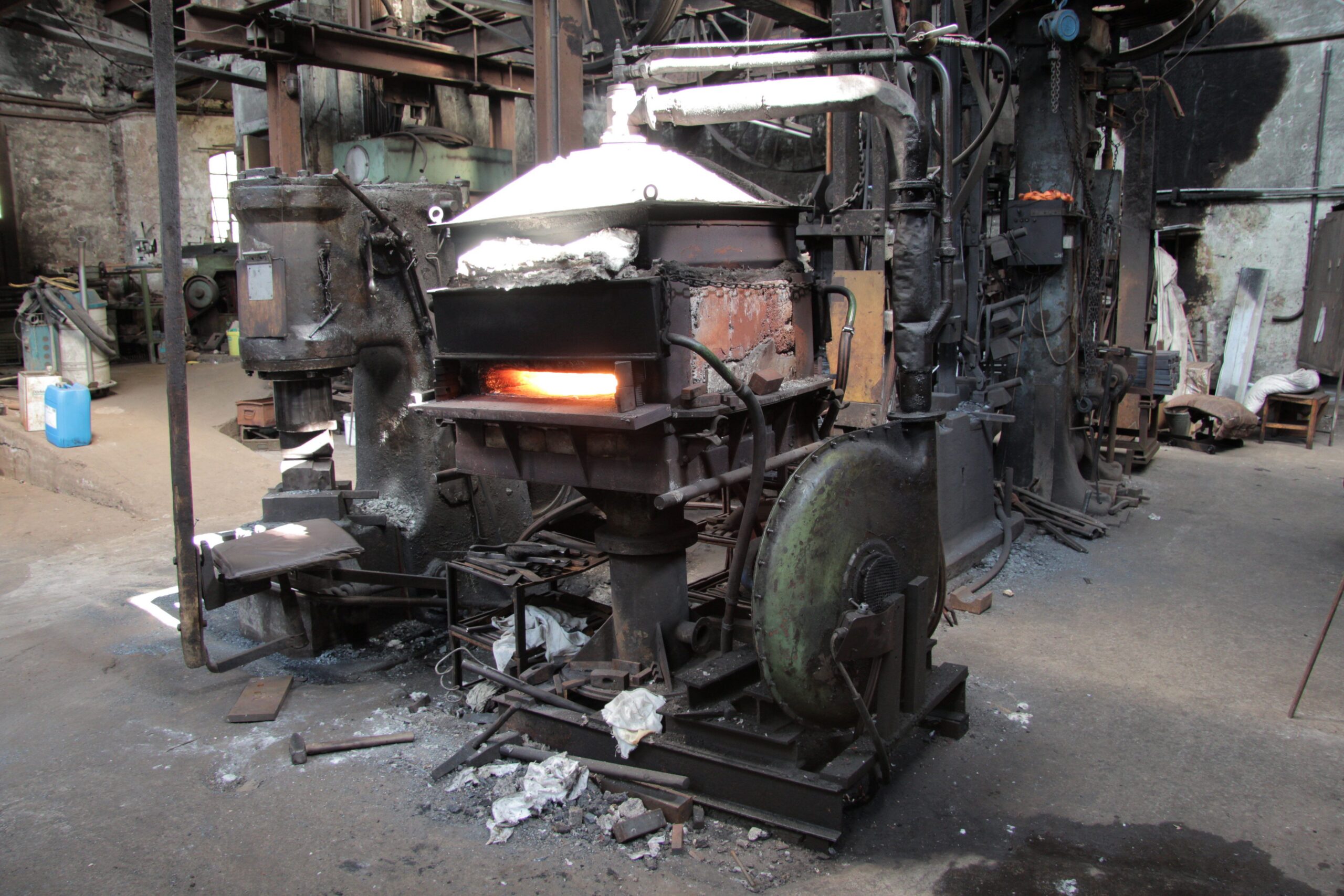
The recorded working noises here are the sounds made by the production of forging-hammer heads in the tool company Krenzer Hammer. It is the last open-die forge still operating today in Ennepetal.
Since 1914 the tool factory has been manufacturing tools such as crowbars and forging hammers. The products and production methods haven't changed significantly since then. The production facilities, which are almost 100 years old, are still functional and in use today.
The following steps in the forging of these hammer heads can be heard on the recording. In the forging furnace the smith heats the iron billets up to a temperature of ca. 900-1000°C. In a stamping press the glowing steel is punctured with a hole for the handle. Using drop hammers and air hammers the smith forms the billet into a hammer head. These hammers are connected to a transmission machine, which is driven by an electric motor (or a water turbine). Finally, the hole for the handle is “flared” to the right size, and the hammer head is hardened in water.
Sound recordist: Konrad Gutkowski/Julian Blaschke
Photographer: Konrad Gutkowski/Julian Blaschke
The signal horn (train horn) is a component of a Kleinlocomotive of the DB-production series 332, built in 1966 by Orenstein &…
Keitelejazz is a summer jazz festival held in the small town of Äänekoski Finland. First Keitelejazz was held in 1985 and the…
Stuttgart 21 is one of the biggest construction projects in Germany. It includes the underground construction of a new central station for…
Handcuffs closed. Handcuffs are restraint devices designed to secure an individual's wrists close together. They comprise two parts, linked together by a…