Mould grinding
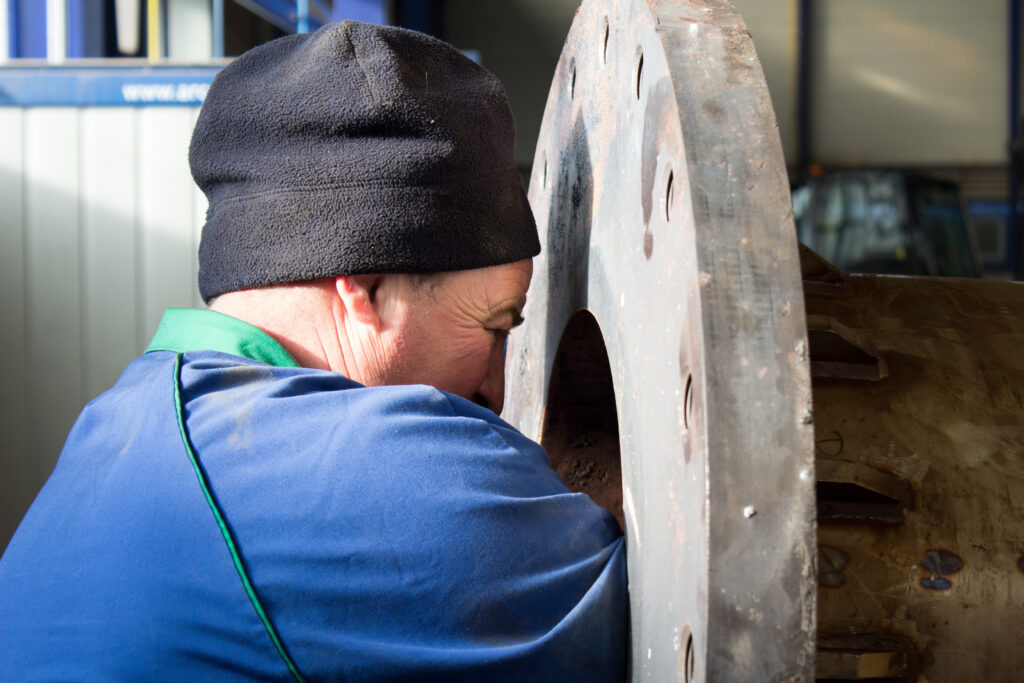
The sound of mould grinding. In the recording, a member of the maintenance staff is repairing an ingot mould with a handheld…

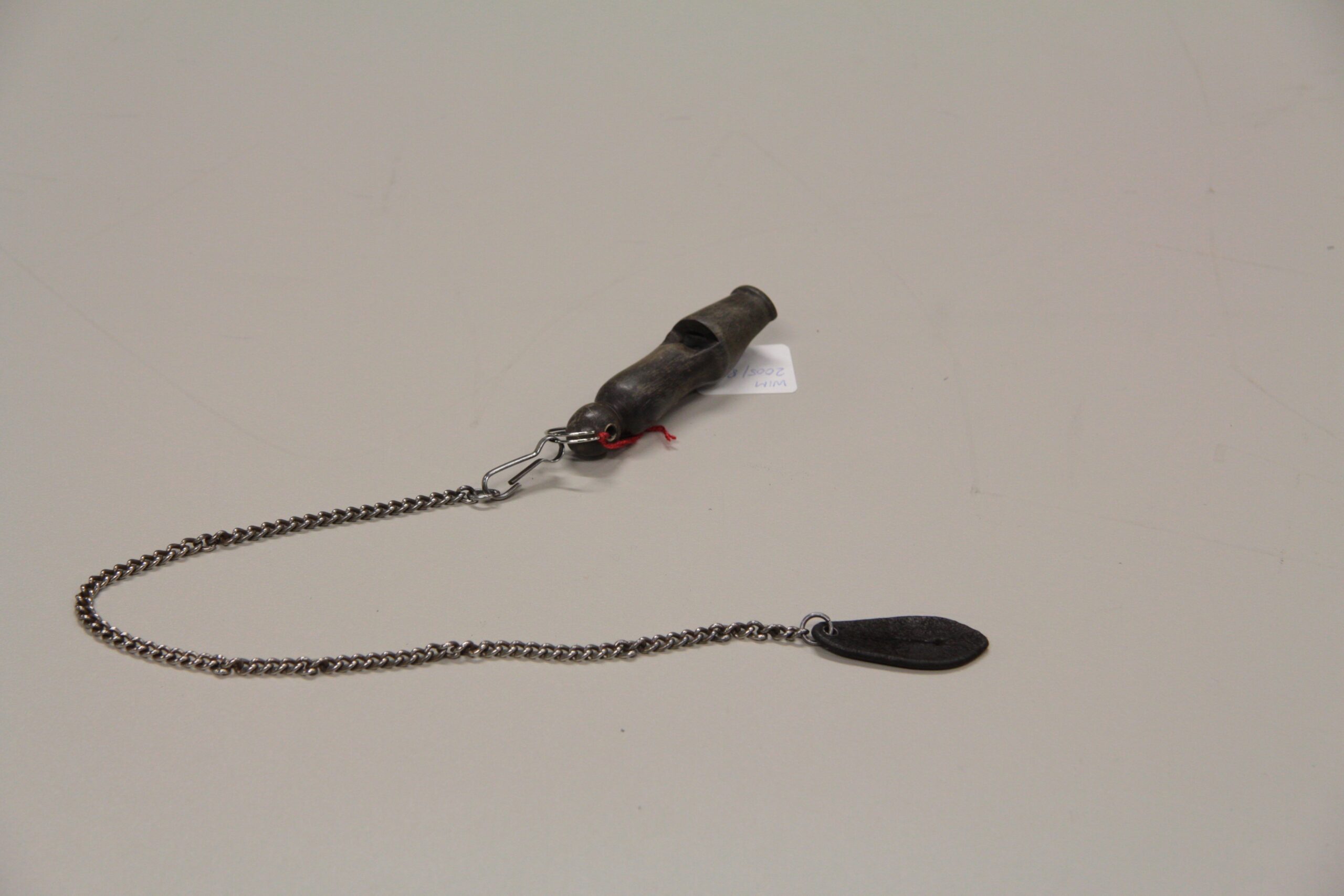
The signalling whistle from the 1950s was part of the work equipment used by a shunter for the industrial railway at the Henrichshütte Ironworks in Hattingen. Today it is part of the LWL-Industrial Museum's collection.
The signalling whistle gave train drivers signals for the shunting job. A long sound (about 3 seconds) means “begin approach”, two long sounds stand for “keep coming”, three long sounds mean “halt”, two short sounds (about one second) signal “ready to uncouple freight cars”.
Communication with the whistle required strong lungs. When the mouthpiece was blown, the stream of air was directed over the edge of an opening in the whistle’s resonance body, where it vibrated out and back in again, generating the sound.
Sound recordist: Konrad Gutkowski / Jonathan Nicolai
Photographer: Konrad Gutkowski / Jonathan Nicolai
Video recordist: Konrad Gutkowski / Jonathan Nicolai
The sound of mould grinding. In the recording, a member of the maintenance staff is repairing an ingot mould with a handheld…
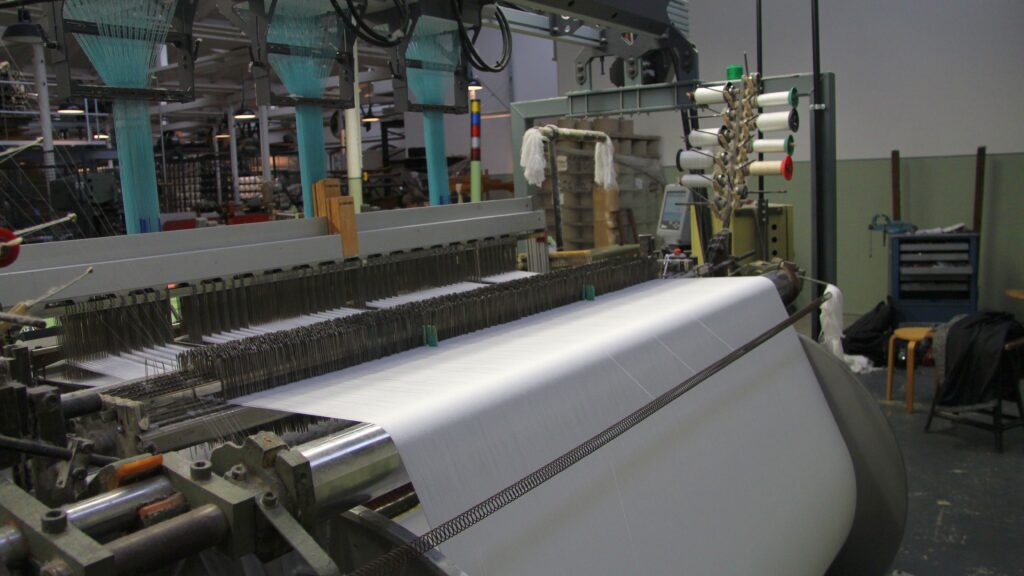
The Rapier Rod Weaving Machine Saurer 400 uses a rapier rod that inserts the weft thread from one side only. This allows…
This is the sound of pins being selected for the needle work. Lace is an openwork fabric, patterned with open holes in…
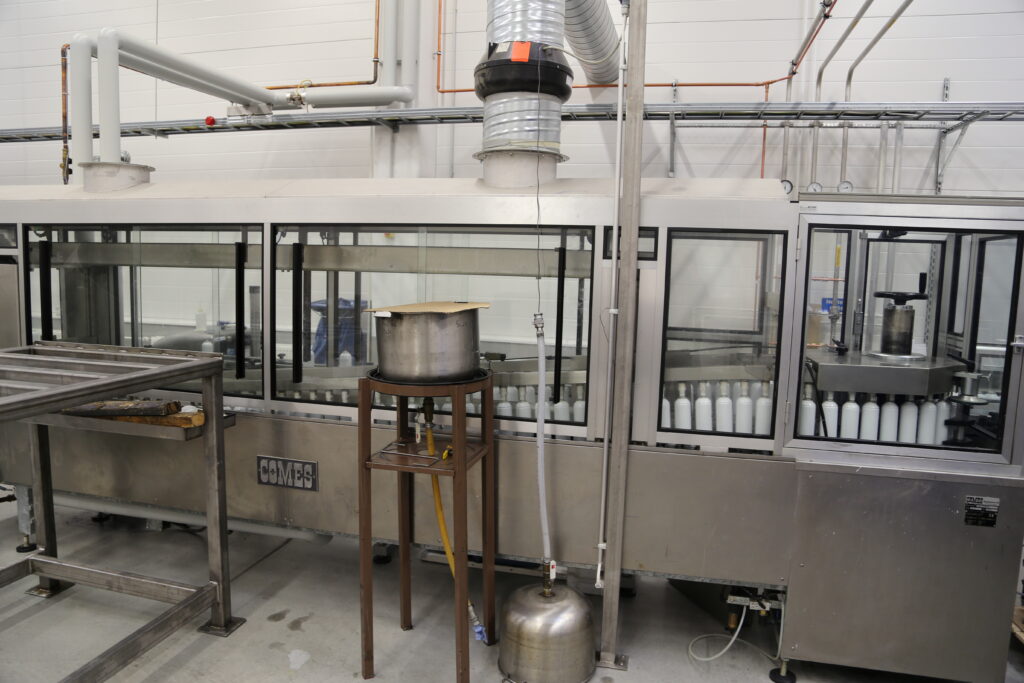
Made in 2001 by Comes, Maschinenbau AG Switzerland. Type: Eco 50-R. The waterbath is used to ensure that the seals of the…