Bucket-Chain Dredger I – Mining
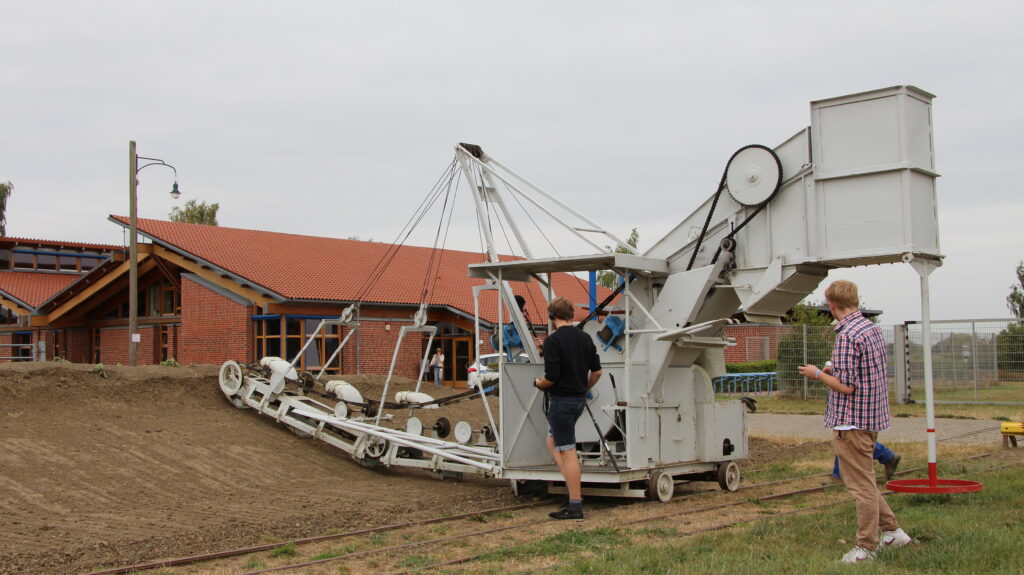
Bricks, one of the most common materials in building, are made from clay. In order to mine large quantities of clay large…

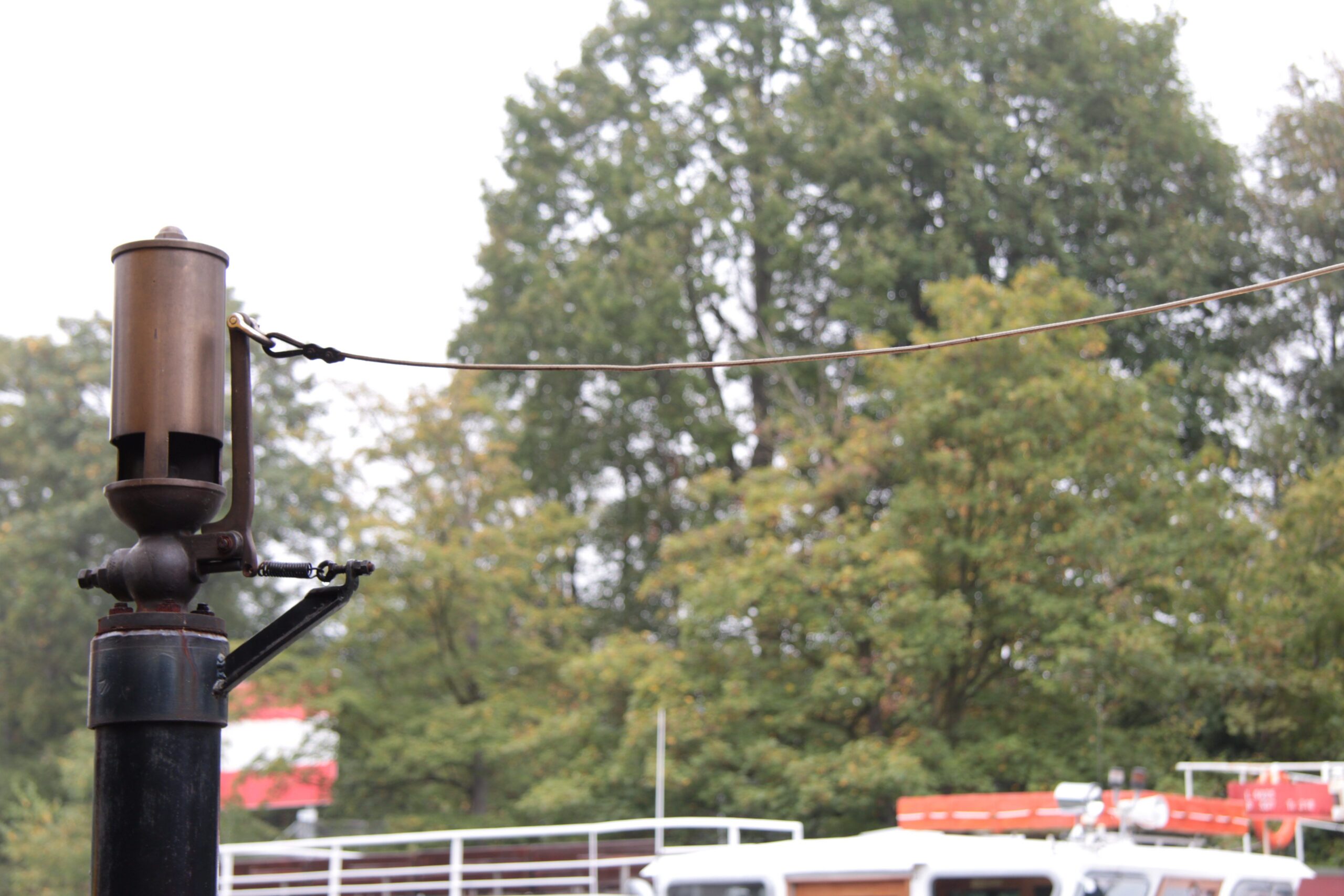
The steam whistle of the steamboat “Nixe” from the year 1939 served as a means of communication through acoustic signals for the inland shipping industry. The “Nixe” was on duty on the Mittelland Canal and on the Elbe as a tugboat and for supervision and travel for the Canal Authority. Today the LWL-Industrial Museum uses this ship for visitor excursions.
Through certain sequences of short (1 second) and long (4-6 seconds) toots, the steam whistle could give danger and warning signals. In addition, signals alerting to bad visibility conditions as well as maneuvering signals could be given.
In order to produce a sound, the skipper pulls a lever in the wheelhouse to open a valve, thereby letting steam escape, which streams from an annular gap against the sharp edge of a whistle bell. This generates vibrations in the air column of the bell, which are perceived as a loud whistling sound.
Sound recordist: Konrad Gutkowski / Jonathan Nicolai
Photographer: Konrad Gutkowski / Jonathan Nicolai
Video recordist: Konrad Gutkowski / Jonathan Nicolai
Bricks, one of the most common materials in building, are made from clay. In order to mine large quantities of clay large…
These sounds were recorded in The Valla forest Nature reserve which is located in Linköping, Sweden. This is a nature reserve that…
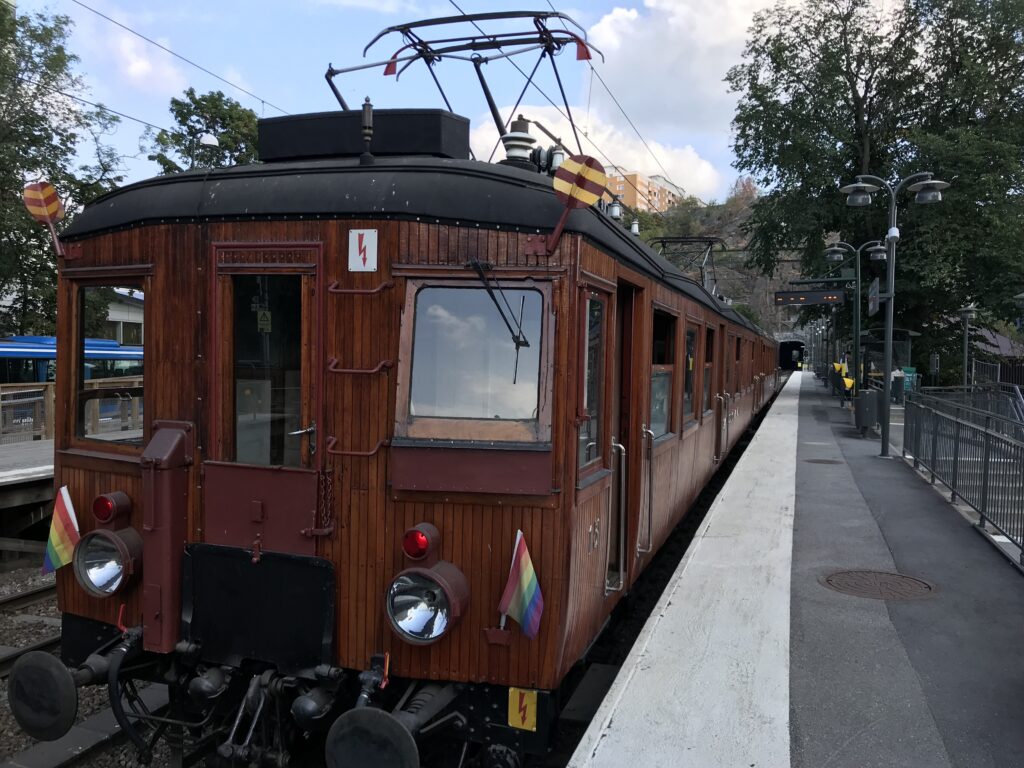
This is a train built in 1912 and a part of the Saltsjöbanan railroad which goes out towards the Stockholm archipelago. The…
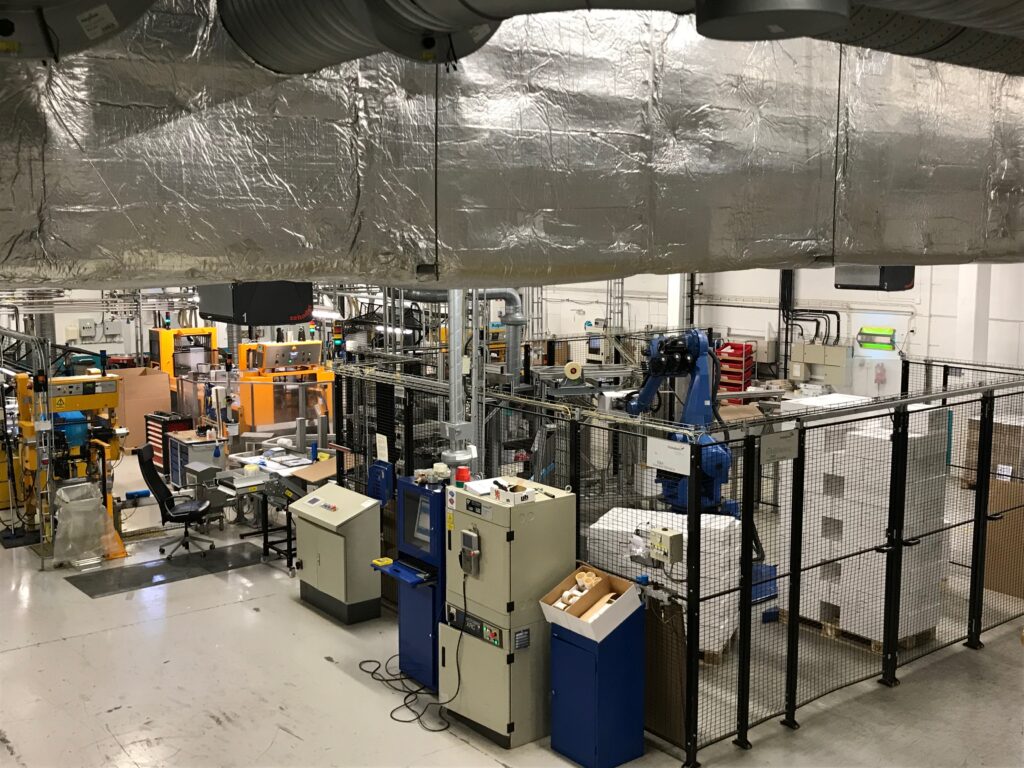
This is the overall soundscape of a modern small-scale factory that produces disposable plastic piping bags. The soundscape vary heavily depending on…