REVOLVING THEATRE STAGE – underneath
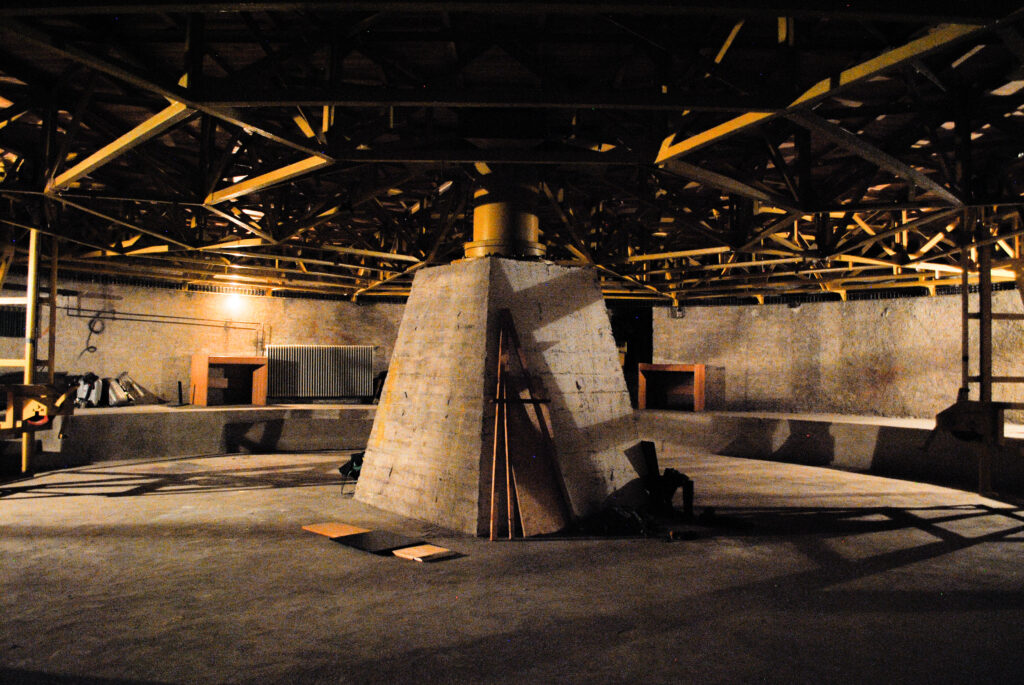
The sound of the revolving platform is recorded from below the revolving stage. It is powered by an electrical motor and runs…

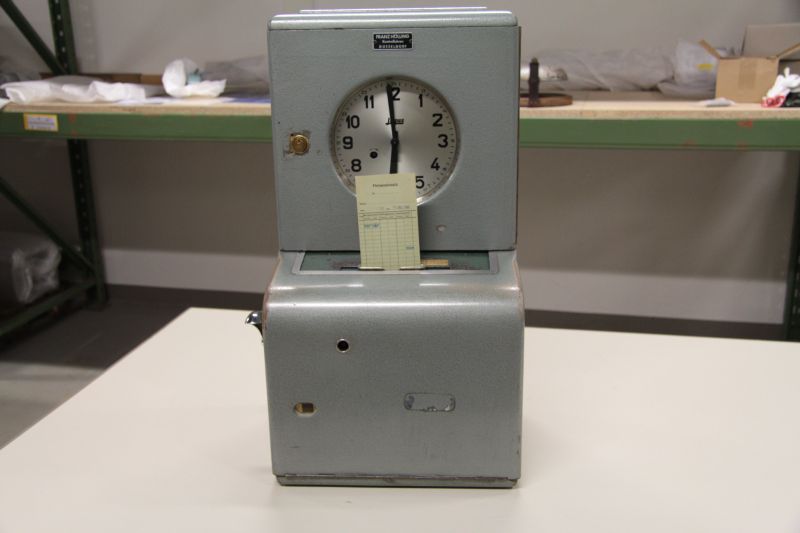
The time clock of the brand “Isgus” was used to record working hours on punch cards. Up until the 1950s, the company Viktor Chemical Works, a nitrogen plant in Castrop-Rauxel, used this clock to monitor the workers‘ hours. Today it belongs to the LWL-Industrial Museum's collection.
Although regulated and supervised working hours were instituted around 1820, it took over 100 years until this type of control clock was installed in factories on a large scale. The initial purpose was merely to record attendance, but it developed into a means to monitor the time as well. The working hours of the employees were supervised and precisely documented to the minute.
The sound of the time clock was heard every time the workers punched their cards. It accompanied them in their work rhythm and marked the beginning and end of their work shift.
Sound recordist: Konrad Gutkowski / Jonathan Nicolai
Photographer: Konrad Gutkowski / Jonathan Nicolai
Video recordist: Konrad Gutkowski / Jonathan Nicolai
The sound of the revolving platform is recorded from below the revolving stage. It is powered by an electrical motor and runs…
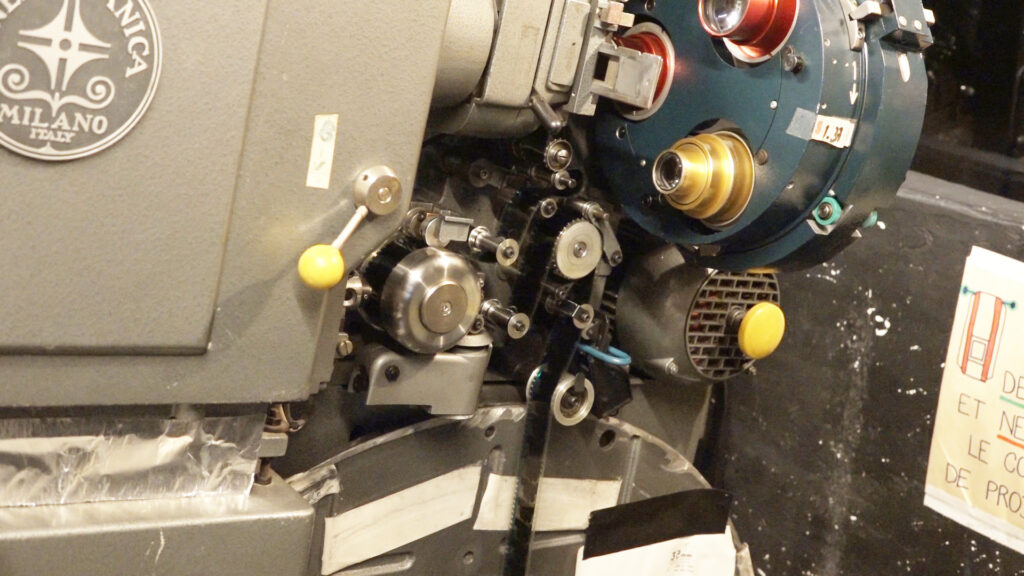
The projectionist first turns the machine by hand, to check that everything is alright, and to ensure that the film is properly…
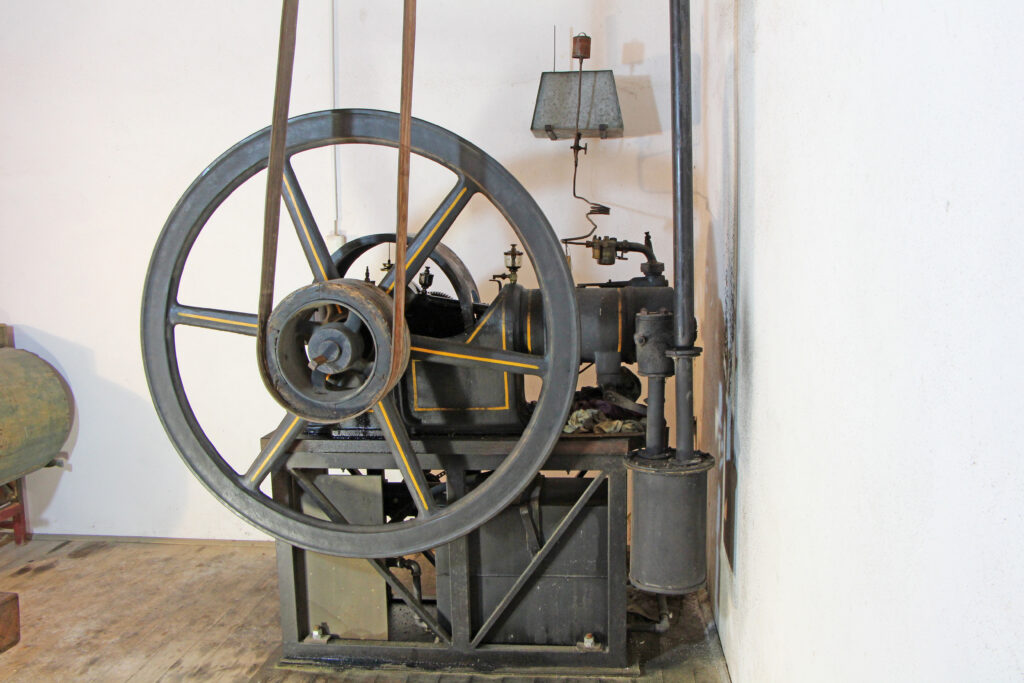
Stationary engines were mainly used for driving farm machinery. Like other forms of motive power (water, steam), stationary engines used in agriculture…
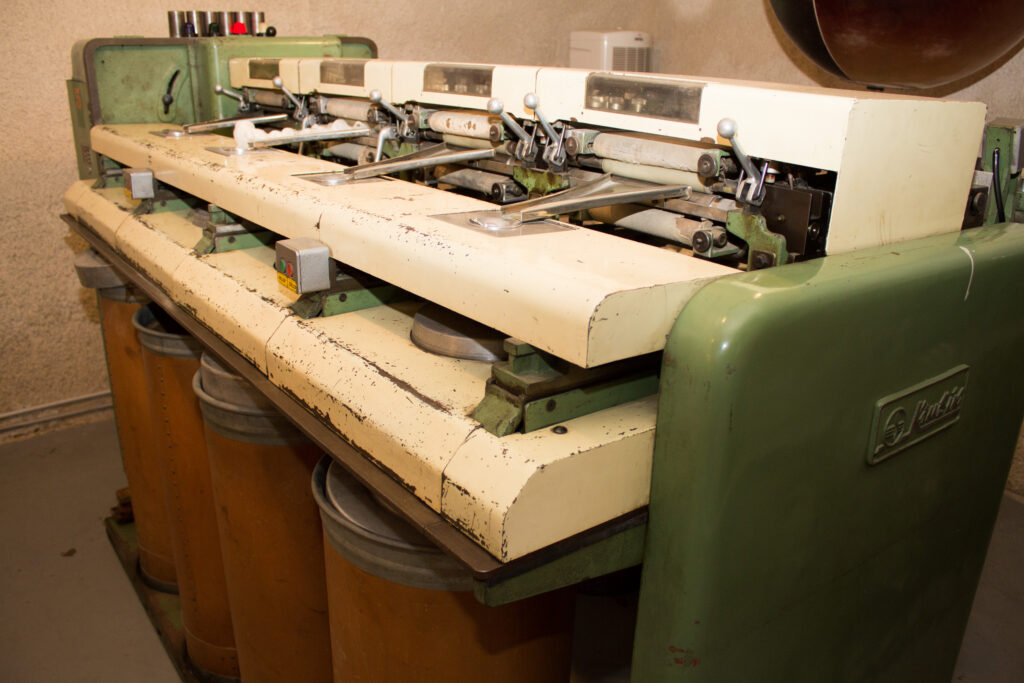
The draw frame was manufactured in 1970 under licence from Zinser in the factory of Krušik Valjevo, in Yugoslavia. It was in…