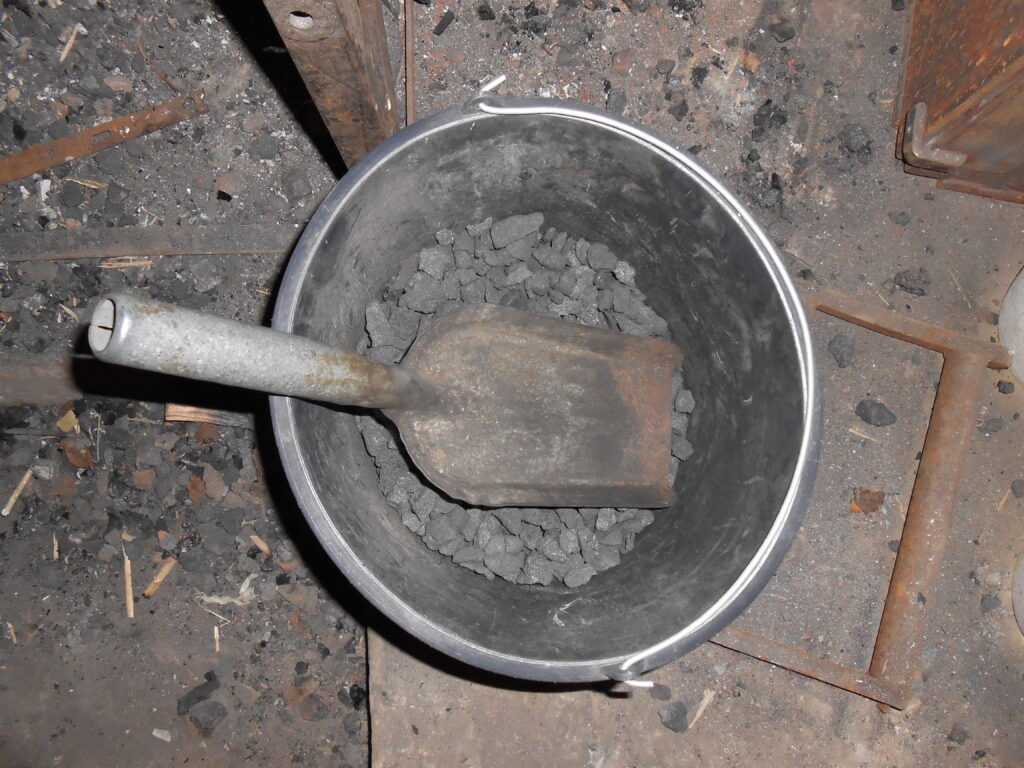
Shovel and bucket (forge)
A forge typically uses bituminous coal, industrial coke or charcoal. Once specific coal for forging was the norm. But it had the…

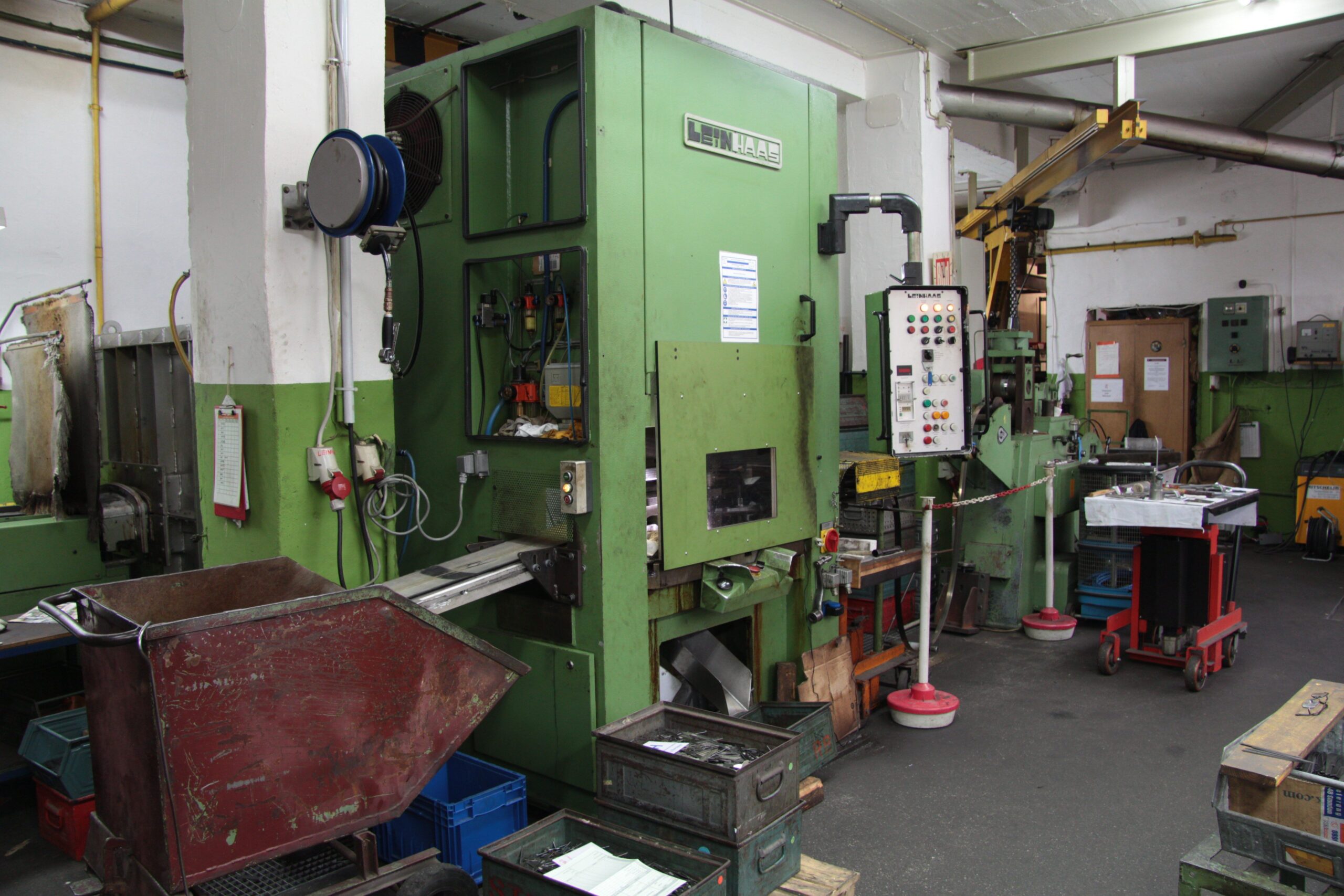
The punching press, manufactured by Leinhaas in the 1980s is applied in the first steps of the blade production: it unwinds a coil of steel strip and punches out steel knife blanks (ca. 100 per minute) by means of a stamp. It then sends these as well as the excess steel to collecting bins. The stamps, which are driven by an electric motor, are exchangeable – depending on the shape of the knife. The sounds of the machine are an ensemble of the humming of the electric motor, the unwinding of the steel strip, the punching of the stamp and the transportation of the steel knife blanks into a collecting bin.
The punching press is in use at the knife factory Windmühlenmesser Robert Herder in Solingen (Germany, North Rhine-Westphalia), which was founded in 1872. Today the enterprise is in its 4th generation, headed by Giselheid Herder-Scholz. It has maintained techniques and methods of manual knife-making which have vanished more and more with the growth of mechanical fabrication.
In Solingen the production of blades has a long tradition. As early as the 14th century blades were made in large numbers in Solingen. Until the end of the 19th century the entire economy of Solingen was dominated by the cutlery industry.
Sound recordist: Konrad Gutkowski/Julian Blaschke
Photographer: Konrad Gutkowski/Julian Blaschke
Video recordist: Konrad Gutkowski/Julian Blaschke
A forge typically uses bituminous coal, industrial coke or charcoal. Once specific coal for forging was the norm. But it had the…
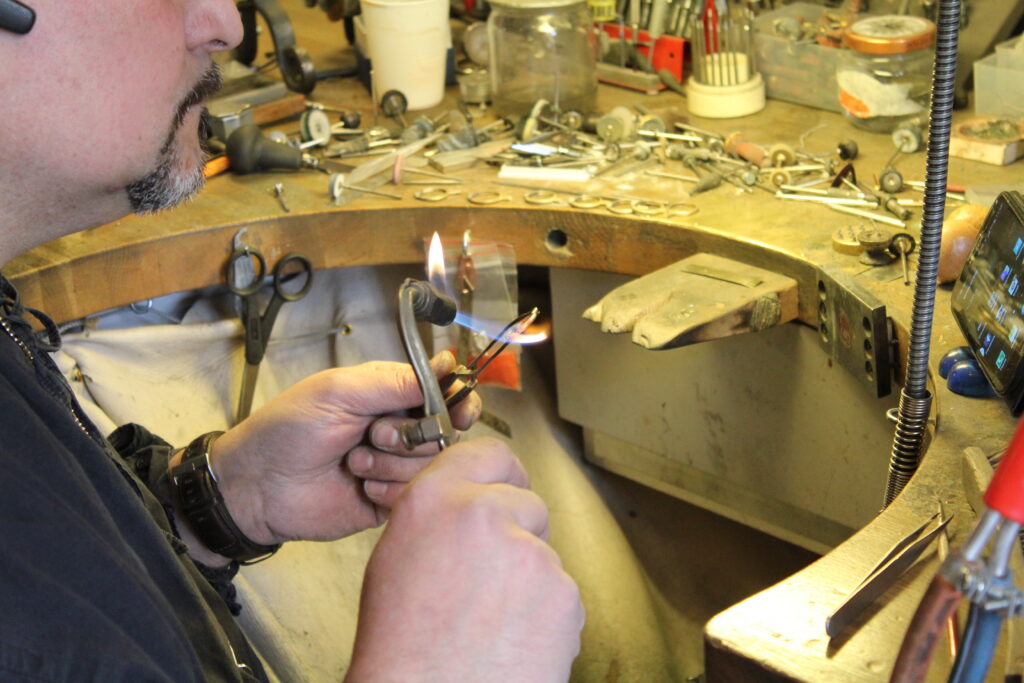
Goldsmith heats a golden diamond ring to be molded for a stone setting. A blowtorch is ideal for heating and also for…
The City council of Tampere decided about the construction of the tramway on 7 November 2016. A two-lane tramway will be built…
This machine was owned by the Facit company in Åtvidaberg. At the peak there were about 100 machines of this kind with…