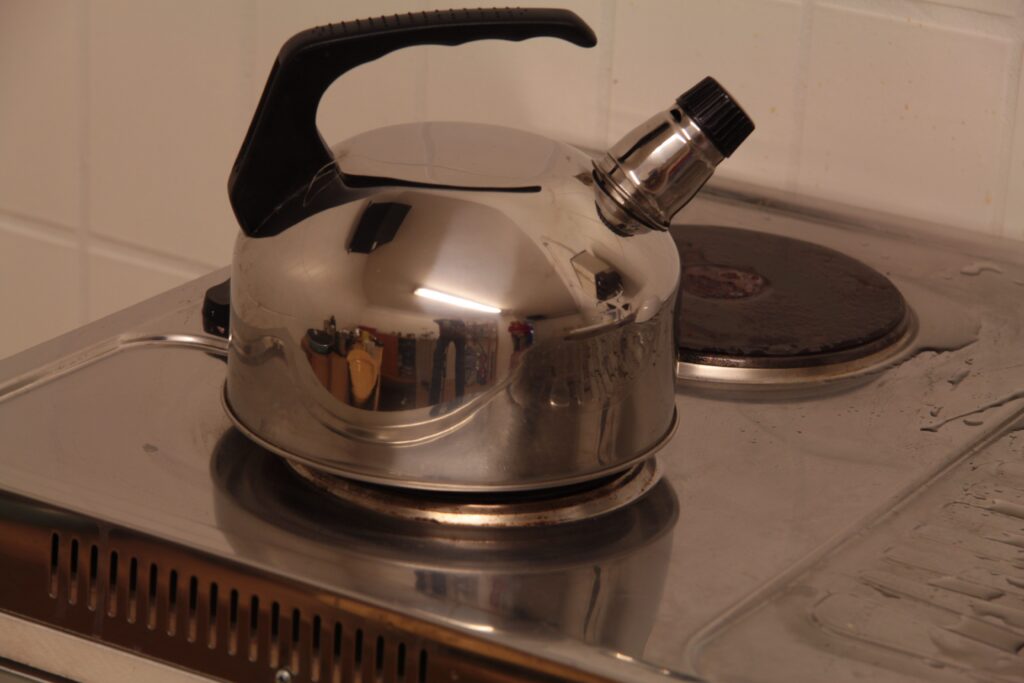
Whistling kettle
The whistling kettle (teakettle) from around the year 2000 is privately owned and serves the purpose of heating water on a stove.…

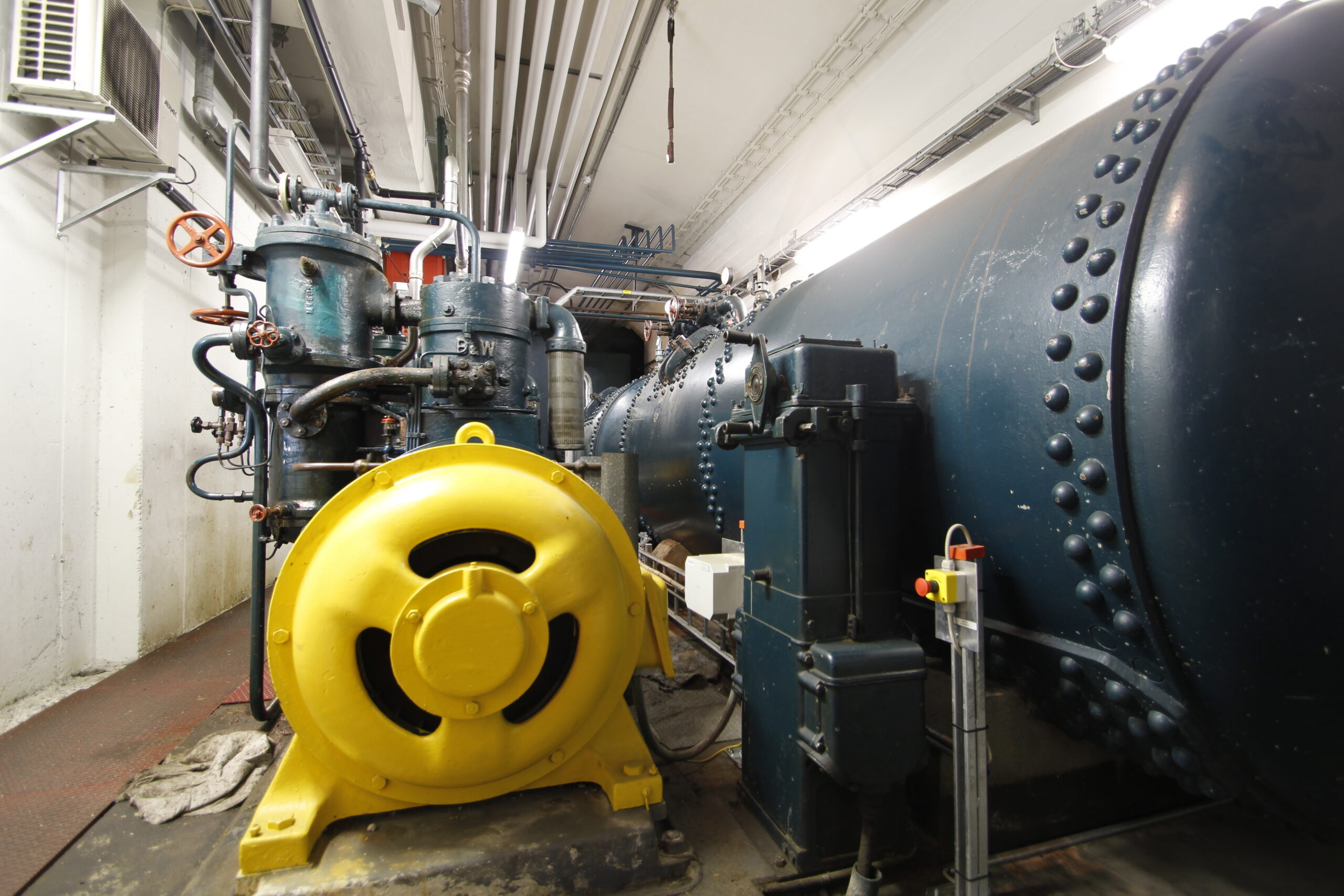
Compressor is filling the pressure tank.
Compressed air is used to start the diesel engine.
From its first trial run in 1933 and some 30 years ahead, the H.C. Ørsted engine was the largest land-based power plant engine. Up until the late sixties, the purpose of the engine was to generate electricity to Copenhagen and most of Zealand during the peak loads of the electricity grid, in the morning and at 15.00-16.00 when most people got off from work. During the Second World War, the H. C. Ørsted power plant and its engine played an important role as a hideout for the resistance movement and a place where they could store weapons and other resistance effects.
A special feature of the engine is that it is a double-acting two-stroke engine. This means that ignition takes place both when the piston is in its top position and when it is in its bottom position – a technology which is no longer in use.
H.C. Ørsted engine
Cylinders = 8
Length = 24.5 m
Height = 12,5 m
Output = 22,500 effective horsepower
Total weight = 1 400 tons
1 complete cylinder = 20 tons
Weight of the 730 mm thick crankshaft = 140 tons
Turning wheel = 80 tons
The engine was last in use during the extensive power breakdown in 2003 that hit Copenhagen and most of Zealand and large parts of Sweden. The engine’s ability to start unaided without the use of electricity meant that it played a major role in the efforts to re-establish power, because modern-day engines need electricity to be able to start.
Today the engine is started to enjoy the attending public.
Sound recordist: Torsten Nilsson
Photographer: Torsten Nilsson
The whistling kettle (teakettle) from around the year 2000 is privately owned and serves the purpose of heating water on a stove.…
A group of Togolese protesters chose the World Climate Conference in Bonn (COP23) as an occasion to protest against the Togolese president…
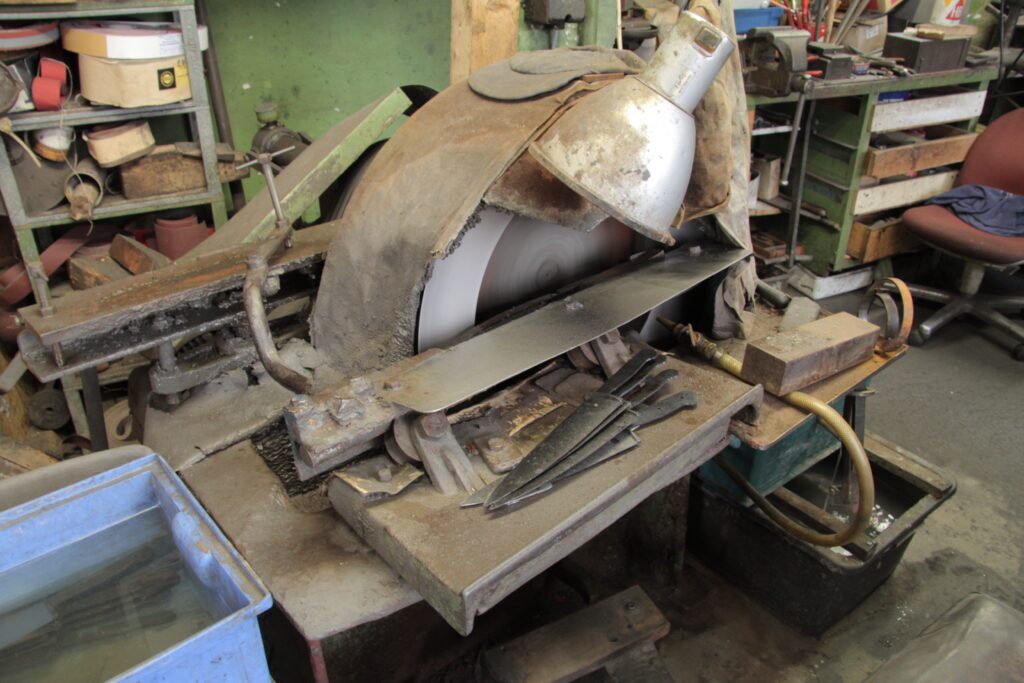
The “Kessel” sharpening machine was developed in 1910 by Heinrich Kessel (died in 1959). It is in use in the knife factory…
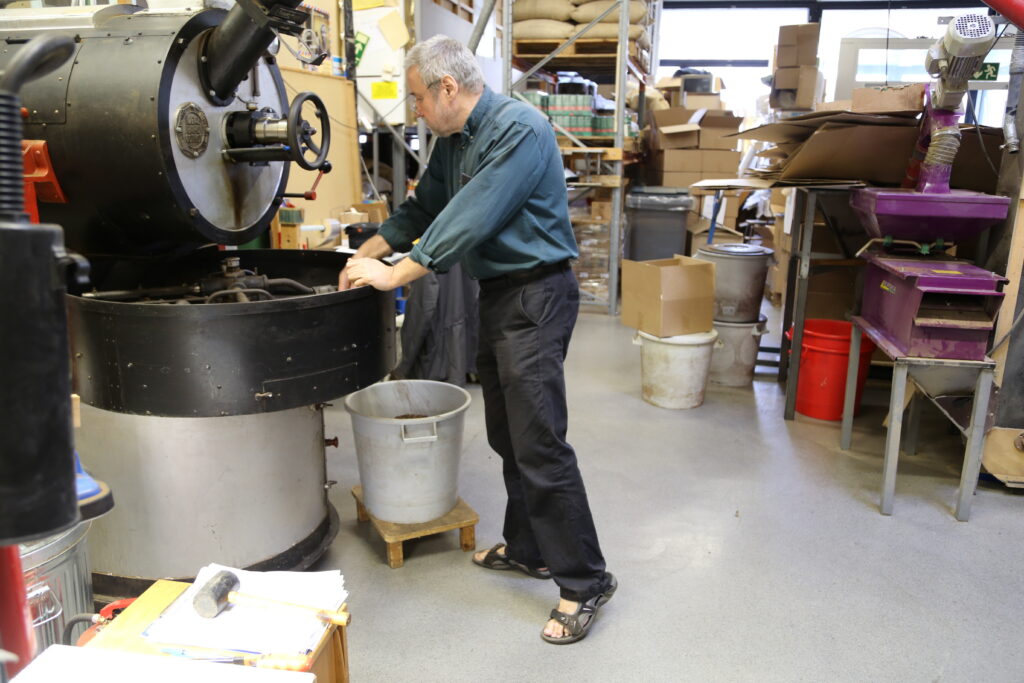
Coffee roaster: Ideal Rapid Gothot Made in 1951,Germany Type JRHS1, machine nro 138. Motor Heemaf, Dortmund,Germany. Bought from Holland in 1998. Max.…