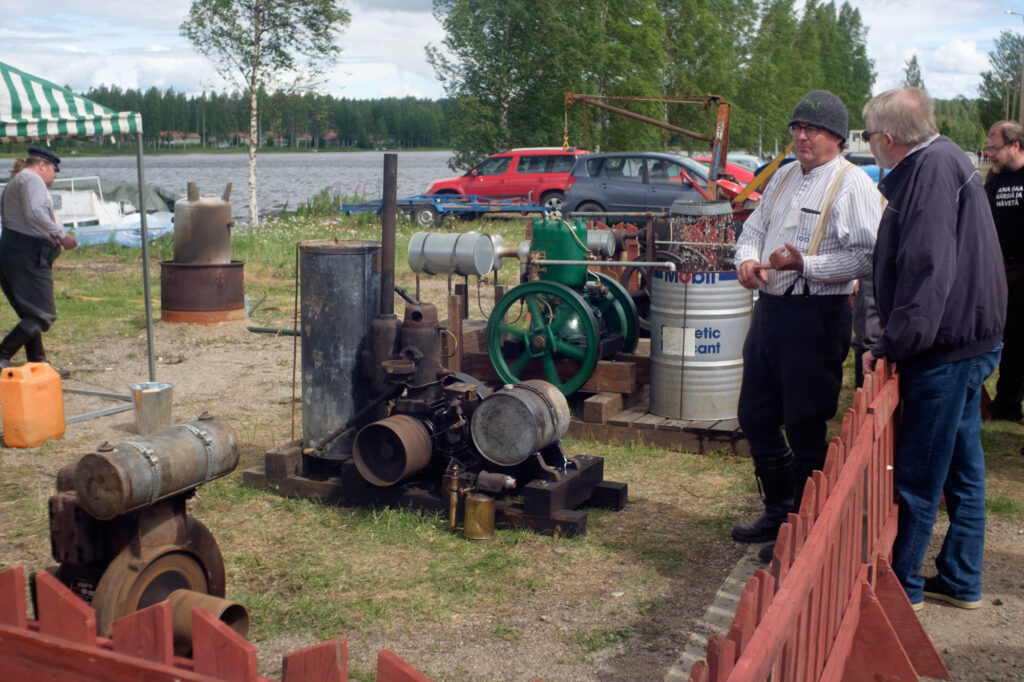
Four Stationary Engines from 1940’s
Stationary engines were common in Finland especially in the countryside. They were used to power up for example farm machines and mills.…

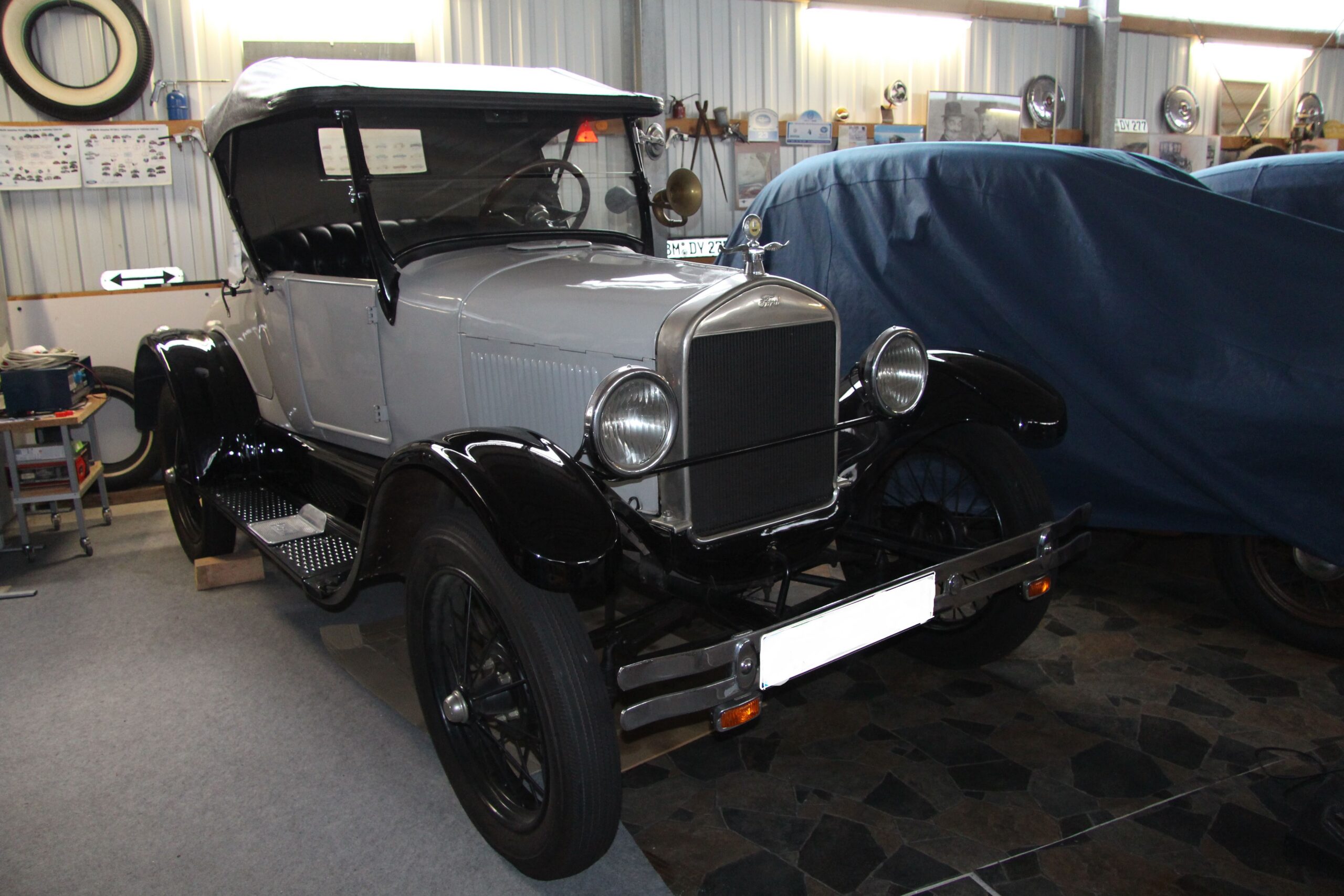
The Ford Model T marks the starting point of mass motorisation. It was developed by Henry Ford. From 1914 onwards Ford produced the Model T on a production line. This reduced production costs significantly and made the “Tin Lizzy” the first car that was affordable for the masses. With 15 million cars that were produced until 1927 it was the most successful car model at the time. This record was broken by the VW Käfer as late as 1972.
The Ford Model T in the recording was produced in 1926. It is owned by a private collector, who lives close to Cologne. Before coming to Germany it had been exhibited in a museum in Yukon (Canada). It is unclear, however, whether the car has been restored in the past and how this may have affected its sound.
In this recording you can hear the starting of the engine of a Tin Lizzy. To start the engine a crank, which is positioned at the front of the car, is turned clockwise. As can be seen in the video the recordist was close to the crank when it was turned and the engine startet.
Photographer: Kathinka Engels
Video Recordist: Kathinka Engels
Sound Recordist: Kathinka Engels
Stationary engines were common in Finland especially in the countryside. They were used to power up for example farm machines and mills.…
The sound of the socket opening on the end track of a BT1 tow car. The socket is used to control the…
The sound of shovelling and putting sand in the tank located in the historic SN1 tram car. Sand was and remains necessary…
Sound recorded in front of a steam turbine that drives an electric power generator. The heat recovered from the exhaust gas is…